
The report found that IPR-intensive industries employed 56.5 million Europeans (out of a 218 million), or 77 million including indirect jobs, and accounted for €4.7 trillion in GDP.
IPR-intensive industries are defined as those having an above-average “use of IPR” per employee. Use of IPR was based on registrations of patents at the EPO and trade marks and designs at OHIM, with separate measures for copyright and GIs. National filings were not counted.
The report looked at five IP rights: patents, trade marks, copyright, designs and geographical indications. Trade marks-intensive industries were the biggest contributors to jobs, accounting for 20.8% of total employment, and to GDP, accounting for 33.9%.
The report is the first attempt to put a value on the contribution of IP to the EU economy, and follows a similar study published by the USPTO in 2012. The period 2008-2010 was chosen partly to compare with the US study, and the EU figures are slightly higher overall – though the US study did not include designs or GIs.
IPR-intensive industries account for a higher share of EU exports than imports (90% compared to 88%). Interestingly, the study found a trade deficit in trade mark and patent-intensive products and a surplus in copyright, design and GI-intensive industries.
The full report includes detailed breakdowns of the figures by the different IP rights, and by country, as well as details of the methodology.
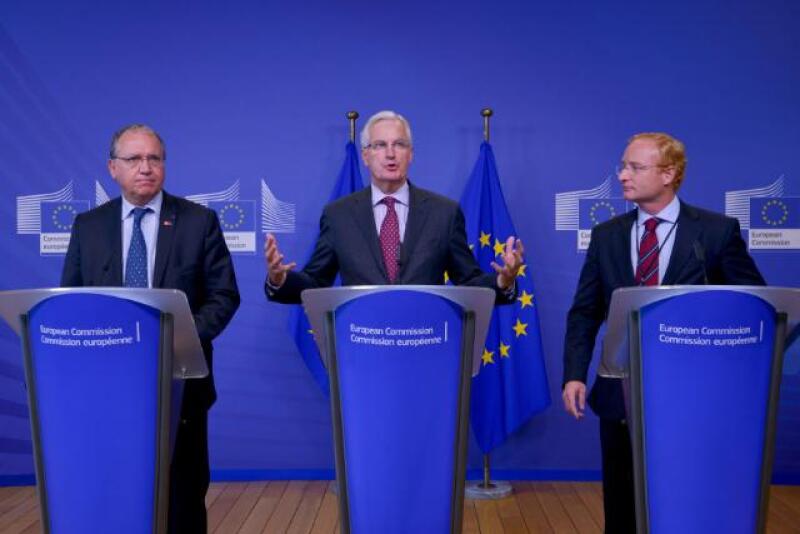
Launching the report in Brussels, European Commissioner Michel Barnier (centre) described IP rights as “a cornerstone of economic policy”. In response to a question, he also acknowledged “learning lessons” from the debate over ACTA and the criticisms made about IP.
EPO President Benoît Battistelli (left) said the report illustrated the “links in the chain” connecting IP, innovation, competitiveness and employment and showed “the real positive impact on the EU economy”.
OHIM President António Campinos (right) described the figures as “impressive” and said the report was “a first contribution to a better understanding of the impact of IP”. But he added that “the puzzle is not complete” and there need to be more studies covering more regions.
Another report, covering perceptions of IP in Europe, is understood to be under way and likely to be published soon.
The report is expected to be welcomed by IP owners. One source in Brussels told Managing IP it was "extremely useful" and "makes a compelling case" for investment in IP.
But it remains to be seen whether it will convince sceptics about IP protection. There are also likely to be questions raised about the methodology, including the choice of rights covered, the definition of IPR-intensive industry and the weight given to different IP rights.
Managing IP will have further analysis of the report later this week.


