
Playlist and podcast patent holder plays on

|
The Sansa Fuze Plus |
Personal Audio, the holding company known for asserting its so-called podcast patent (US Patent No 8,112,504) against major podcasters such as comedian Adam Carolla as well as networks NBC and CBS, is also seeing success in other parts of its portfolio. Ars Technica reports that SanDisk has agreed to license Personal Audio’s patent portfolio, including two (US Patents No 6,199,076 and 7,509,178) that cover audio playlist navigation and organisation. SanDisk is best known as a flash memory company and is a relatively small player in the audio player market, but Personal Audio has also struck agreements or prevailed in court against Apple, Motorola and Amazon.
Study: graduated response not effective
A study released this week by Monash University law lecturer Rebecca Giblin argues graduated response systems are ineffective in dealing with online copyright infringement. Looking at systems in France, New Zealand, Taiwan and South Korea, Giblin examined the extent to which the programmes reduce infringement, maximise authorised uses and “promote learning and culture by encouraging the creation and dissemination of a wide variety of creative materials”. By all three standards, the study argues that graduated responses are not effective.
Citing the report, the Green Party of New Zealand called for a review of the country’s three-strikes law. The program, which came into effect in September of 2011, handed down its first fine in January of this year.
Accusations fly in Bristol-Myers Squibb compulsory licence battle
The Times of India reports that Indian generic BDR Pharma has accused Bristol-Myers Squibb (BMS) of misleading the Delhi High Court. The two companies are locked in a multi-front battle over BMS’s leukaemia drug dasatinib. BMS has filed infringement proceedings against BDR, while BDR has applied for a compulsory licence for the drug under section 84 of the Patents Act. Counsel for BDR told the Times that BMS “misled” the court by stating that BDR’s compulsory licence application was rejected by the Patent Controller. Though the Patent Controller issued a preliminary notice stating that BDR did not establish a prima facie case for the licence, BDR argues that application is still pending with a final hearing scheduled for September 17.
In addition to the dasatinib compulsory licence application filed by BDR, the Indian government has also requested a compulsory licence for the drug under the “national emergency” provision (section 92) of the Patents Act. The request is still pending, though the Department of Industrial Policy and Promotion has already rejected one section 92 request for another drug, Ro
Teresa Stanek Rea to leave USPTO
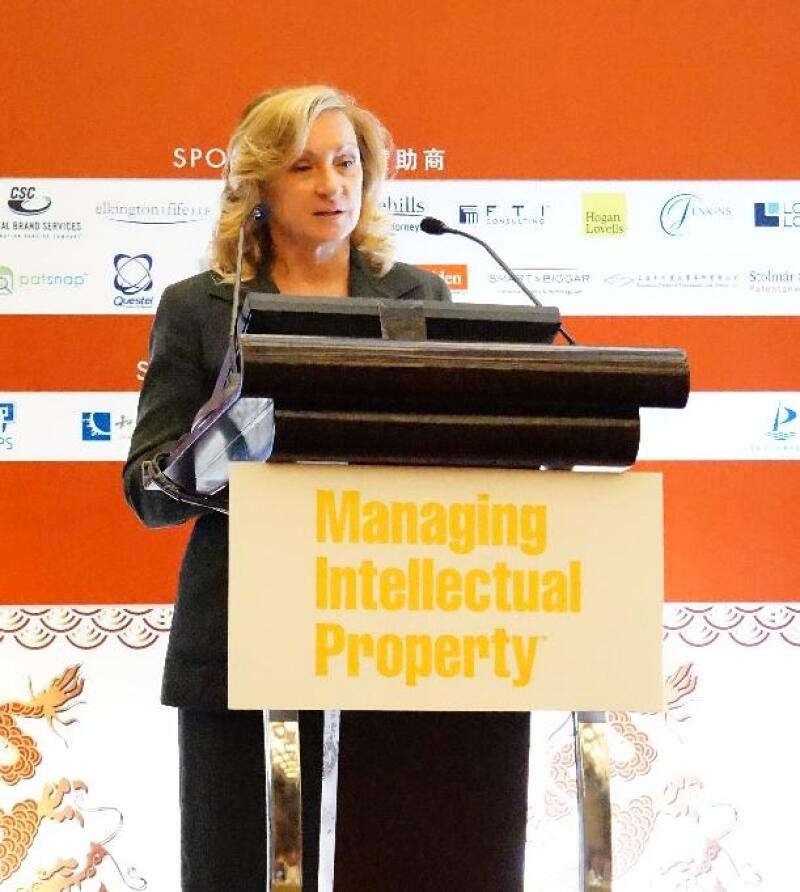
Acting director Teresa Stanek Rea (right), who took the helm at the USPTO after David Kappos’s departure in February, has announced that she will be stepping down “in the near future”. In an email to her USPTO colleagues and later posted on the Patent Docs blog, Rea states that she expects her successor will be appointed soon, and praised the work done by the office especially during the sequester. She did not reveal what her future plans were.
Rea was the keynote speaker last week at Managing IP’s Global IP & Innovation Summit in Shanghai. Be sure to check Managing IP’s website for her interview with Emma Barraclough.


