
On June 4 2019, the Japan Fair Trade Commission (JFTC) issued a cease and desist order and surcharge payment order to KOA ISEI Co LTD (KOA ISEI) under the provisions of the Antimonopoly Act.
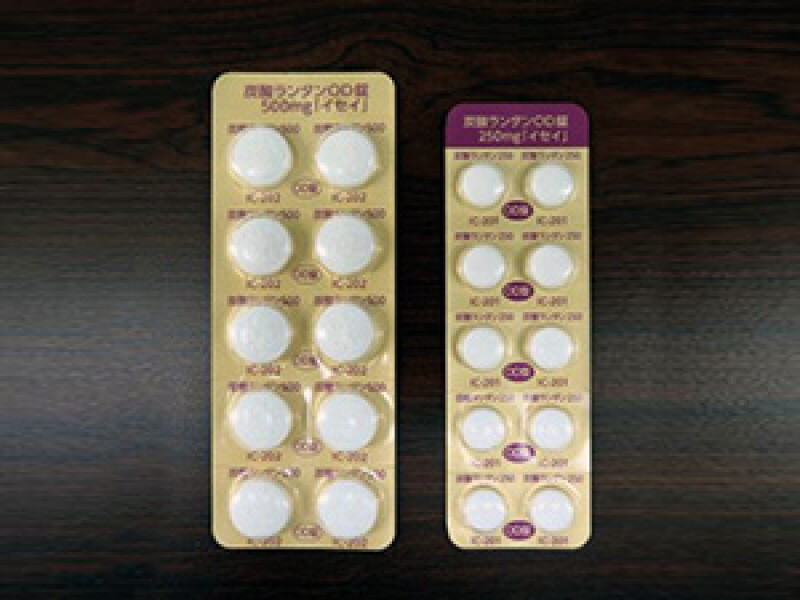
In this case, the manufacturers of the generic drug of Lanthanum Carbonate Hydrate Orally-Disintegrating Tablets used as hyperphosphatemia treatment (Generic Lanthanum Carbonate OD) had violated the provisions of Article 3 of the Antimonopoly Act (prohibition of unreasonable restraint of trade).
Outline of the violations
(1)
a) Nippon Chemiphar Co LTD (Nippon Chemiphar) outsourced to KOA ISEI the manufacture of all the amount of Generic Lanthanum Carbonate OD to be sold as Nippon Chemiphar's product. On June 20 2018, KOA ISEI and Nippon Chemiphar (the two companies) mutually confirmed that they would not sell their Generic Lanthanum Carbonate OD at low prices.
b) On July 20 2018, Nippon Chemiphar presented the wholesale price of its own Generic Lanthanum Carbonate OD to KOA ISEI asking KOA ISEI to meet Nippon Chemiphar's price to set a consistent wholesale price for KOA ISEI's product.
c) In response to the said request in b), in early August 2018 KOA ISEI replied to Nippon Chemiphar saying that KOA ISEI would decide the price of its Generic Lanthanum Carbonate OD targeting the price presented by Nippon Chemiphar.
(2) As a result of said (1), by early August 2018 at the latest the two companies had agreed that the wholesale price of the Generic Lanthanum Carbonate OD would be set targeting the price presented by Nippon Chemiphar to KOA ISEI on July 20 2018 in order to avoid the reduction of the price and secure profits.
(3) By making the agreement in (2), the two companies substantially restrained competition in the field of selling Generic Lanthanum Carbonate OD in Japan against the public interest.
Outline of the cease and desist order
(1) KOA ISEI shall resolve the following matters at the board of directors' meeting.
a) To confirm that the agreement of (2) described in the outline of the violations has been extinguished.
b) Hereafter, not to decide the wholesale price of the Generic Lanthanum Carbonate OD jointly with other companies, but to decide it voluntarily.
c) Hereafter, not to exchange information with other companies regarding the wholesale price of the Generic Lanthanum Carbonate OD.
(2) KOA ISEI shall notify Nippon Chemiphar of the measures taken based on the said (1) as well as the wholesalers of the Generic Lanthanum Carbonate OD, and make the said measures well known to their employees.
(3) Hereafter, KOA ISEI shall not determine the wholesale price of the Generic Lanthanum Carbonate OD jointly with other companies.
(4) Hereafter, KOA ISEI shall not exchange information with other companies regarding the wholesale price of the Generic Lanthanum Carbonate OD.
Outline of the surcharge payment order
KOA ISEI shall pay 1.37 million yen by January 6 2020.
Practical tips
This is the first cartel case for generic drugs. Although the case is small, it reflects a recent movement in the pharmaceutical industry. With close to an 80% share of generic drugs by September 2020, the upward growth generic drug manufacturers enjoyed has slowed down due to drug price reduction and intensified price competition, and companies are seeking survival measures. This deteriorating profit environment in the generic drug industry would have affected the situation in this case.
This is a normal price cartel case that could occur in other industries as well, and is not specific to the pharmaceutical industry. Reverse payment is specific to the pharmaceutical industry in the Antimonopoly Act. The JFTC pointed out that reverse payment is a matter that authorities in the pharmaceutical industry should note and suggested that it is necessary for the JFTC to carry out monitoring as needed and consider ensuring that the Antimonopoly Act is actively applied to such cases (Competition Policy Research Center's collaborative research report entitled Competition and Research and Development Incentives in the Pharmaceutical Market – Through Examinations of the Impact of the Entry of Generic Drugs on the Market, dated October 7 2015).
Nippon Chemiphar applied for leniency. In this regard, since there was no sales amount stipulated in Article 7-2(1) of the Antimonopoly Act (the amount based on which the surcharge is calculated), Nippon Chemiphar was not subject to a surcharge payment order. KOA ISEI did not apply for leniency. Under the present leniency system, the reduction rate was uniformly determined by the application order for leniency, causing some negative effects where the applicants submit only insufficient data to investigate the case, or hesitate to provide materials after application etc. Therefore, the amended Antimonopoly Act came into effect on June 19 2019 in which the JFTC could reduce the amount of surcharges etc. when the applicants newly submit documents contributing to clarifying the case (leniency system for investigation cooperation).
A patent litigation related to Lanthanum Carbonate OD was also filed recently. Bayer filed a patent infringement lawsuit against Nippon Chemiphar, KOA ISEI et al. seeking injunction on the manufacture and sales of Lanthanum Carbonate OD, etc. On June 12 2019, Tokyo District Court dismissed Bayer's claim.

|
Takanori Abe |
ABE & PartnersMatsushita IMP Building1-3-7, Shiromi, Chuo-ku, Osaka, 540-0001, JapanTel: +81 6 6949 1496Fax: +81 6 6949 1487abe@abe-law.comwww.abe-law.com



