
Territorial borders between EU member states should be disregarded in assessing whether a CTM has been put to genuine use in the Community, the Court of Justice of the EU said in December in its long-awaited ruling in the Onel case. Instead, national courts must consider the characteristics of the market concerned, the nature of the goods or services protected and the territorial extent and the scale of the use as well as its frequency and regularity.
The case concerned essentially whether a Community trade mark (CTM) that had been put to genuine use in just one member state met the standard required in the EU Trade Mark Regulation.
Accepted wisdom had always been that use in just one of the 27 EU member states should be sufficient to maintain a mark. But many practitioners have said it is not practical in a 27-member EU, and leads to the CTM register being overcrowded.
In its judgment, the Court said that in certain circumstances the market for the goods or services for which a CTM has been registered is restricted to the territory of a single state: "In such a case, use of the Community trade mark on that territory might satisfy the conditions both for genuine use of a Community trade mark and for genuine use of a national trade mark." But it did not elaborate on the circumstances when this might be the case and declined to lay down a de minimis rule.
Europe
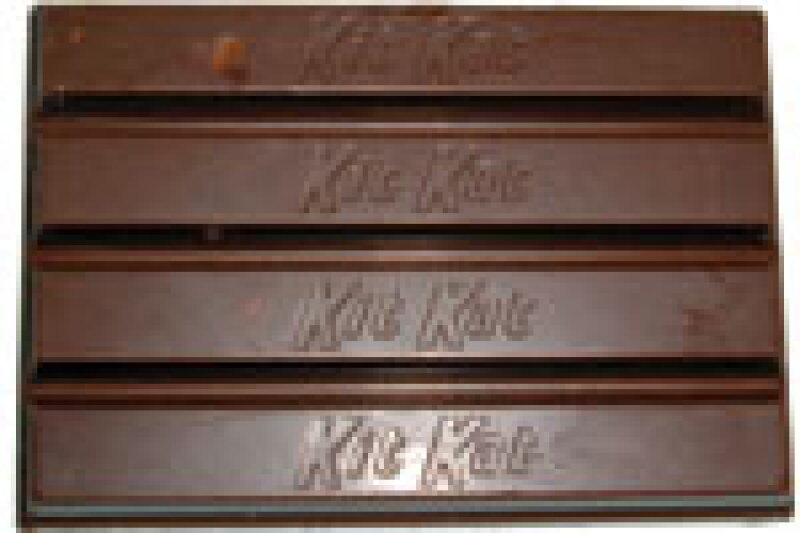
Nestlé secures non-traditional mark
Ten years after applying for a three-dimensional Community trade mark for the shape of its KitKat chocolate bar, OHIM's Board of Appeal has allowed Nestlé to register the mark. Rival chocolate maker Cadbury had challenged OHIM's decision to allow the CTM in 2006, requesting a declaration of invalidity on the grounds of Article 52(1)(a) in conjunction with Article 7(1)(b), (c), (d) and (e)(ii). But in December the Second Board of Appeal said that the trade mark was valid.
UK

Examination reports in five days
Among the measures set out by UK Business Secretary Vince Cable in December to promote creativity and innovation was of a trade mark examinations service that would deliver a full examination report in five days. But the fees for the new services have not yet been set. UK IPO acting head Sean Dennehey said they would be "premium services for a premium price" and the Office would consult on what is reasonable. Cable also announced a campaign to educate small businesses on IP and education about the harm of counterfeiting and piracy for young people.
US
Supreme Court rules in covenant not to sue row
The Supreme Court has ruled in Nike's favour in a dispute related to the company's issuance of a broadly worded covenant not to sue. In doing so, it dismissed an attempt by rival shoe maker Already to invalidate Nike's Air Force 1 trade mark. The Court rejected Already's arguments that dismissing its claims against Nike would allow the trainer-maker to leverage negotiations with the threat of expensive lawsuits. The decision gives trade mark owners who no longer want to litigate an escape route and could lead to more lawsuits being filed.
Europe
Court says yes to Anheuser-Busch's Bud CTM
In the latest round of a long-running legal battle between rival brewers Anheuser-Busch and Budějovický Budvar, the General Court of the CJEU ruled that the Czech company could not prevent the registration of the Community trade mark Bud for beer. It said that Budějovický Budvar had not produced enough evidence showing that it had used the appellation of origin "bud" in the course of trade in a substantial part of the territories of France, Italy, Portugal and Austria.