DoJ SEP policy would impede or speed up negotiations: in-house
In-house and law firm counsel are divided over whether a new standard essential patent draft policy from the US Department of Justice would speed up or stall licensing negotiations if finalised.
On December 6, the DoJ, in partnership with the USPTO and the National Institute of Standards and Technology (NIST), published a draft policy statement on SEPs.
The DoJ has extended an initial 30-day comment period, giving stakeholders until February 4 to provide feedback.
Counsel told Managing IP before the deadline changed that they were concerned that the 30-day comment period meant the policy would be finalised before Kathi Vidal has been confirmed as the next USPTO director and Laurie Locascio as the next NIST head, and both had a chance to influence it.
Sources were also concerned that the policy, if it didn’t change, might slow down SEP negotiations by failing to take the threat of holdout seriously enough.
Other Managing IP stories published this week include:
Jury's out on ‘creative’ alliance from LATAM e-commerce king
Pepsi plant revocation made for lax prosecution not public interest
Indian police's low IP awareness hinders criminal action: counsel
Exclusive: Indian Copyright Office issues withdrawal notice to AI co-author
Exclusive: Copyright modernisation reform in the works at Senate
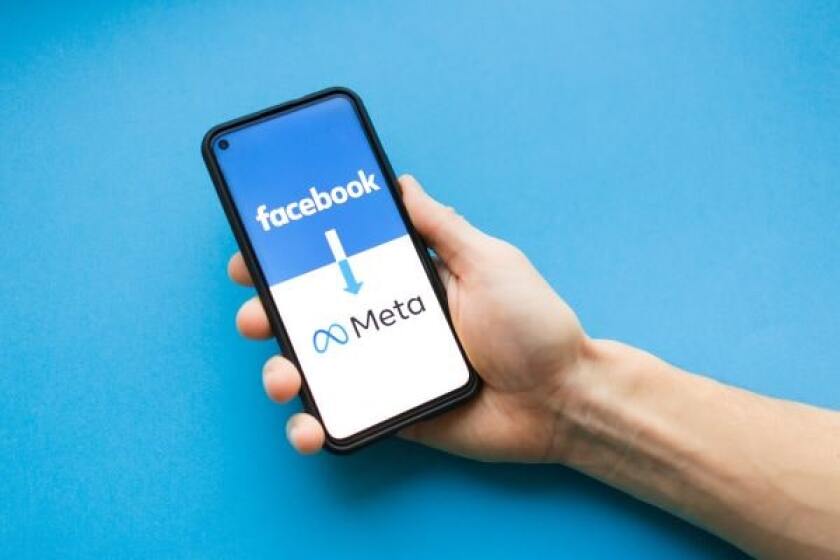
Facebook buys Meta trademarks for $60m
Meta Platforms, Facebook’s parent company, has acquired the trademark portfolio of US bank Meta Financial Group for $60 million, spokespersons for both companies revealed on Monday, December 13.
The South Dakota-based bank disclosed in a filing with the Securities and Exchange Commission that a Delaware company called Beige Key had agreed to acquire the worldwide rights to Meta trademarks.
“Beige Key is affiliated with us and we have acquired these trademark assets,” a Meta Platforms spokesperson said, according to Reuters.
According to the SEC filing, Meta Financial and its subsidiary MetaBank has one year to remove Meta from their names and branding.
Facebook’s much-publicised name change was announced in October. The change was intended to reflect the organisation’s vision of an interlinked digital universe called the metaverse.
But later, the company faced roadblocks in securing exclusive rights in the name.
Chicago-based tech firm Meta Company claimed prior rights, refused to sell it to Facebook for $20 million and alleged trademark infringement in a public statement in November.
IP lawyers speculated at the time that Facebook may try to buy the rights to the Meta trademarks using a “straw man” approach, which would involve making the purchases through shell companies.
Delhi High Court finalises proposed IP division rules
The Delhi High Court published the final draft of its proposed rules governing patent suits and proposed rules for the court’s intellectual property division on Friday, December 10.
Stakeholders were given until today, December 17, to submit their comments.
In a press release, the court said that it had taken into consideration comments already received from practitioners and industry associations while finalising both sets of rules.
After the government abolished the Intellectual Property Appellate Board in April, a two-judge committee constituted by the chief justice recommended creating the IP division to deal with all types of IP cases.
The committee released the first draft of the rules in October. The rules stipulate the procedure for adjudication of IP cases, including filing fresh matters and appeals, recording evidence and intervention by third parties.
Another three-judge committee released the draft patent rules in October last year.
These rules, which aim to fast-track patent litigation, cover aspects including content of pleadings, first hearing of suits, admission and denial of evidence, case management, mediation and the appointment of scientific advisors.
In an interview with Managing IP in November, Justice Pratibha Singh, part of both committees that proposed the two sets of rules, confirmed that the High Court was planning to release the finalised rules shortly.
USPTO to transition to electric patent and trademark issuances
The USPTO announced on Friday, December 10, that it would transition to the electronic issuance of patent and trademark registrations in 2022.
The office published a notice of proposed rulemaking on Wednesday, December 15, to seek feedback on its plans to issue patents electronically. A request for comments about its plans to issue electronic trademark registration certificates was published on the same day.
Parties have until February 14, 2022 to submit their comments.
Drew Hirshfield, USPTO patents commissioner and acting director, said in a blog post that it wasn’t necessary for the office to issue a notice of proposed rulemaking about its transition to trademark electronic issuances, but that it still wanted the public to have a chance to give feedback.
Hirshfeld estimated that the USPTO would be able to issue trademark registrations one to two weeks faster under the new process.
Those who still wish to receive paper copies of granted patents and trademarks will be able to do so for a $25 fee per copy.
EPO Boards of Appeal to return to Munich city centre
The EPO Boards of Appeal are set to return to their old home in Munich city centre, just four years after they relocated to the suburb of Haar.
EPO president António Campinos, alongside BoA president Carl Josefsson, made the joint proposal last Friday, December 10. A detailed plan is expected to follow next year.
The BoA relocated to Haar in 2017, during the term of Campinos’ predecessor Benoît Battistelli.
The plan was controversial owing to Haar’s location 12 kilometres outside Munich city centre, posing what many attorneys saw as an unnecessary burden in terms of travel and expense.
Under the new plan, the BoA will be located in the EPO’s Pschorr-Höfe 7 premises in the more central Bayerstrasse area from 2025/2026.
According to Campinos and Josefsson’s proposal, the original rental contract for the Haar building agreed in 2017 lasts until 2032. An additional contract signed in 2019 expires in 2026.
Taylor Swift copyright suit heads toward jury trial
Taylor Swift must convince a jury she didn’t infringe copyright with the lyrics for her 2013 hit Shake It Off, a California federal judge ruled last Thursday, December 10.
Songwriters Sean Hall and Nathan Butler sued Swift in 2017, claiming she copied lyrics from their 2001 song Playas Gon’ Play, performed by girl group 3LW.
The chorus of Hall and Butler’s song contains the phrase “Playas, they gonna play / And haters, they gonna hate”, which they say is “substantially similar” to the lyrics of Swift’s track.
Swift’s legal team wanted the US District Court for the Central District of California to dismiss the suit, based on the evidence of expert musicologists who supported her case.
But Judge Michael Fitzgerald ruled the case should be decided at a jury trial instead.
“There are still numerous factors … that do not eliminate the possibility that there is still a genuine dispute as to the potential substantial similarity between the lyrics and their sequential structure as framed by plaintiffs,” Fitzgerald wrote.
Marina Bogorad, partner at Gerard Fox in Los Angeles, who acted for Hall and Butler, told Rolling Stone: “Our clients are extremely satisfied with this decision, especially because it reinforces the notion that their unique self-expression based on the deeply rooted cultural heritage cannot be simply snatched away without proper attribution.”
“We are pleased that the court refused to engage into a battle of the experts, especially given that defendants’ resources vastly outweigh those of our clients here, and it is about time that justice should serve the merits rather than deep pockets,” Bogorad added.