|
David Stone |

|
Nicholas Bolter |
For many years, traders have used colours or combinations of colours to distinguish their goods and services from those of other traders. Think of the distinctive blue used by jewellery retailer Tiffany - sight of that distinctive blue box instantly conveys the source of the excitement inside. Colours can be evocative and memorable at a deep sensory level - fine attributes for a trade mark.
As a result, traders have also sought to keep other traders away from the colours they use - through seeking trade mark protection for "their" colours, and by enforcing unfair competition laws and common law rights such as passing off. Of these, a registered trade mark must be considered the ultimate achievement - potentially giving a trader exclusive rights in the market place for a colour, and all confusingly similar colours.
Since the EU's Trade Mark Directive of 1988, European trade mark registries and courts have struggled to define the circumstances in which colours will be allowed registration as trade marks. The ECJ's 2003 decision in Libertel answered many of the issues in relation to single colour marks per se, confirming that such marks are registrable in limited circumstances.
Libertel involved a single colour: the justices of the ECJ did not address trade mark claims for combinations of two or more colours.
The main difference between the registration of one colour per se (for example, orange, as applied for by Libertel Groep BV) as opposed to two or more colours per se (such as FedEx's purple and orange) is that two or more colours can be arranged in an infinite number of ways. Purple and orange could appear, for example, as stripes or checks, or in various arrangements that lead to significantly different commercial impressions for consumers.
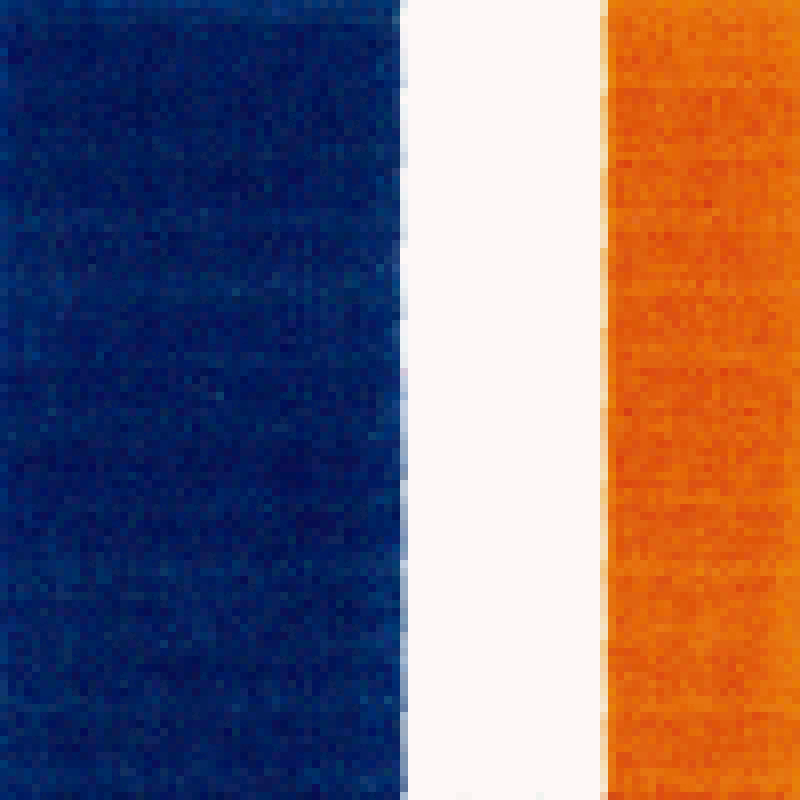
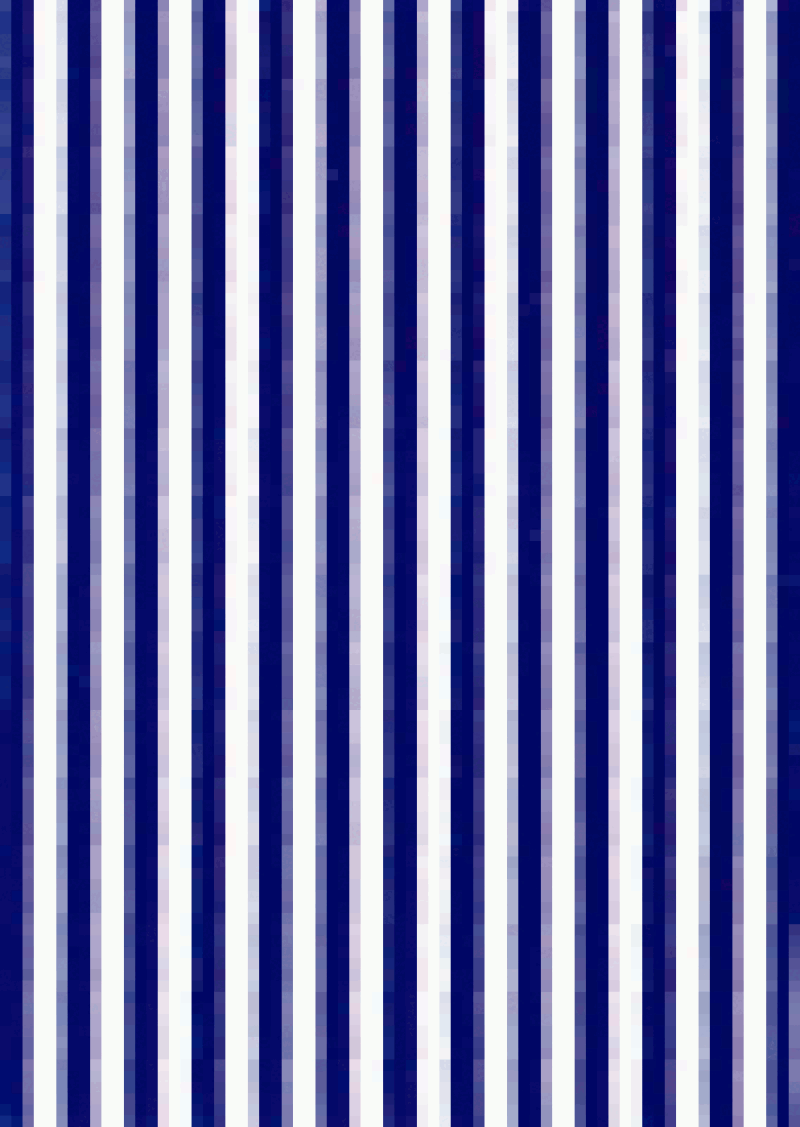
The EU's trade mark registry, OHIM, has allowed registration of a number of combinations of two or more colours, some of which are illustrated in figure 1.
After reviewing the ECJ's recent decision in Heidelberger Bauchemie GmbH (ECJ, Case C-49/02, June 24 2004), the following question will be asked: Which of these three registrations is still valid? The answer is most likely: none of them, because the ECJ has significantly raised the hurdle for registration of colours per se, while still leaving open some important questions of interpretation.
Colour combinations registered at OHIM |
|||
CTM number |
212753 |
1178938 |
1018779 |
Trade mark |

|
|
|
Colours |
Magenta and grey |
Enzian blue (RAL 5010), signal white (RAL 9003) and pastel orange (RAL 2003) |
Ultramarine (RAL 5002) and signal white (RAL 9003) |
Owner |
Deutsche Telekom AG |
Rexroth Indramat GmbH |
JT Ronnefeldt KG |
Goods/services |
Telecommunications services |
Tools, machines and related services |
Foodstuffs and alcoholic spirits |
The case before the ECJ
German company Heidelberger applied to the German Patent Office for trade mark registration of the colours blue and yellow - "the applicant's corporate colours which are used in every conceivable form, in particular on packaging and labels".
Appropriate international colour chart references were given in the application. Registration was sought in relation to a range of building supplies.
| Definitions "Colour per se" is a catch-all phrase for signs which consist only of a designation of colour, without other word or device elements, and includes such expressions as "abstract colour", "colour without contours" and "colour as such". |
The German Patent Office rejected the application on the grounds of lack of distinctive character. Heidelberger appealed to the Bundespatentgericht, which referred two questions to the ECJ, asking, in short, whether combinations of colours per se are registrable as trade marks, and, if so, in what circumstances.
The ECJ's decision
The TRIPs Agreement and German trade mark legislation both require the registrability of trade marks consisting of combinations of colours (see box) so at one level (and especially in light of Libertel) that issue was never in doubt. The real issue was which combinations of colours should be registered, and in what circumstances.
The ECJ's analysis started with a three-step test for registrability for combinations of colours per se:
the combination of colours per se must be a sign;
the sign must be capable of being represented graphically; and
the sign must be capable of distinguishing the goods or services of one undertaking from those of other undertakings.
The first two issues had been dealt with by the ECJ in Libertel and its 2002 decision on smell trade marks, Sieckmann. Building on the Sieckmann requirement that the graphical representation of a trade mark be "precise and durable" in order to enable other traders to know the extent of the registrant's rights, the ECJ in Heidelberger held that a graphic representation consisting of two or more colours "must be systematically arranged by associating the colours concerned in a predetermined and uniform way". Specifically, the ECJ rejected Heidelberger's claim to use blue and yellow "in every conceivable form": this would not provide the "precision and uniformity" required by other traders.
The ECJ also held that, without the "systematic arrangement", consumers would not "perceive and recall" a particular combination. This suggests, although not expressly, that a non-systematic arrangement of a combination of colours cannot constitute a "sign" - and would thereby fail the first test as well.
In relation to the third test, the ECJ again relied on Libertel, holding that "save in exceptional cases, colours do not initially have a distinctive character, but may be capable of acquiring such character as the result of the use made of them in relation to the goods or services claimed". In short, the ECJ required that applications for registration of a combination of colours per se be backed up by proof of acquired distinctiveness. This is the US position, where proof of secondary meaning is required prior to registration of a colour.
Combinations of colours are now more difficult to register
Counter-intuitively, a combination of colours, which might be thought to be more distinctive than one colour on its own, is now more difficult to register than a single colour. The ECJ has decided that an application for a combination of colours must include a "systematic arrangement associating the colours concerned in a predetermined and uniform way", a requirement not laid down for single colour marks.
| The legislation Article 15(1) of the TRIPs Agreement "Any sign, or any combination of signs, capable of distinguishing the goods and services of one undertaking from those of other undertakings, shall be capable of constituting a trade mark. Such signs, in particular words including personal names, letters, numerals, figurative elements and combinations of colours as well as any combination of such signs, shall be eligible for registration as trade marks" (emphasis added). Article 2 of the EU Trade Mark Directive "A trade mark may consist of any sign capable of being represented graphically, particularly words, including personal names, designs, letters, numerals, the shape of goods or of their packaging, provided that such signs are capable of distinguishing the goods or services of one undertaking from those of other undertakings." Paragraph 3(1) of the German Markengesetz "Any sign, particularly words, including personal names, designs, letters, numerals, acoustic signs, three-dimensional forms including the shape of goods or their packaging as well as other get-ups including colours and combinations of colours, which is capable of distinguishing the goods or services of one undertaking from those of other undertakings may be protected as a trade mark" (emphasis added). National trade mark legislation in France and Italy also expressly includes combinations of colours. Portuguese legislation expressly excludes the registrability of colour combinations. |
The ECJ has not backed the Advocate General's opinion by requiring an applicant for a combination of colours per se trade mark to specify how those colours appear on packaging, buildings, staff uniforms etc, although this is likely to be the practical outcome of the decision in many cases.
It might be of some assistance to examine the three registered CTMs referred to above, and express some personal opinions on the validity of those registrations in light of Heidelberger.
The first - Deutsche Telekom's magenta and grey - gives no "systematic arrangement" to the colours, and, for that matter, no Pantone or other colour chart references. Despite the significant recognition Deutsche Telekom has achieved in parts of Germany for the colours magenta and grey (60% of the surveyed group in the evidence filed in one case), the validity of this registration must now be in doubt.
Rexroth's blue, white and orange colours give an RAL reference for each colour. The "systematic arrangement", if any, is shown pictorially - blue covers twice the surface area of the other two colours. In our submission, this is insufficient to meet the ECJ's test of registrability - if it is a "systematic arrangement" (which is doubted), it is not "predetermined" or "uniform", particularly given the vast array of goods and services specified in the application.
In our view, Ronnefeldt's registration for blue and white strips comes closest to validity. RAL colour chart references are given, as is a systematic arrangement - "the colours are arranged alternately in strips of equal width". Only a small number of goods are specified. If Ronnefeldt is able to prove that the sign has acquired distinctive character in relation to the goods claimed, then the third of the ECJ's tests is met. One residual doubt remains - "strips of equal width" could be any of the following, which will look very different if used on the lid of a jar of jam:



Therefore, even the description in this registration may not be "precise" enough.
Is guidance available from elsewhere?
German jurisprudence is more developed in this area than other EU member states - it is no accident that the three CTMs referred to above are all registered to German owners.
Despite the clarity of Germany's trade mark legislation (see box), the Federal Patent Court held in 1998 that a combination of colours is only capable of registration as a trade mark within the framework of the packaging of the product, or other get-up. In other words, combinations of colour per se were not registrable. Following Libertel, the German Federal Supreme Court had an opportunity to revisit the issue in an application for an injunction by Deutsche Telekom seeking to enforce its registration for magenta and grey. The Court overturned the earlier decision invalidating the mark, and instead granted the injunction. No assistance was given on the issue of what may constitute a "systematic arrangement".
UK courts have engaged less often with the issue, but perhaps more helpfully. Oil company BP owned registrations for the colour green, as applied to various parts of the exterior of petrol stations. The trade mark registration included the following "systematic arrangement":

BP sued John Kelly Ltd, a competitor who was using a similar colour green on its petrol stations. At first instance, the Northern Ireland High Court ruled that the trade mark registration was valid, but not infringed. On appeal, the Court of Appeal affirmed the validity of the trade mark, but reversed the High Court decision, finding the registration was infringed. In our submission, the graphical representation in BP's registration would meet the ECJ's requirement for a "systematic arrangement".
Enforcement
In one sense, the registrability of combinations of colour per se is an academic exercise, if the registrations are practically unenforceable.
Practical guide to registering combinations of colour per se Whilst the law is not yet completely clear, follow these practical tips to ensure greatest likelihood of achieving registration of a valid colour trade mark within the EU:
|
The ECJ's guidance in Heidelberger on registration of combinations of colours per se is helpful (if incomplete), but does not touch on the enforceability of these types of marks. How broad a penumbra of protection will be given to a mark consisting of a combination of colours?
Few cases have considered it, and none in the light of Heidelberger. In the petrol station case referred to above, the Northern Ireland Court of Appeal did not consider that BP's exclusive rights were limited to petrol stations in the design included in the trade mark registration, but would extend to all petrol stations, and the colour claimed was extended to include similar shades of green. The judges considered BP's green and John Kelly's green in the context of a driver seeing them at a distance and approaching at speed along a road. The Court of Appeal found a likelihood of confusion, even though the John Kelly petrol station included John Kelly's word and device marks, and none of BP's logos, name etc. It is likely that the question of this comparison (mark for mark, or a global assessment in light of other designations of origin) will have to be resolved by the ECJ.
Prior to resolution by the ECJ, it seems safe to assume that, to establish infringement of a mark consisting of combinations of colours per se, the registered mark and the allegedly infringing mark will need to be very similar. In addition, while assessing similarity of colours for the purposes of trade mark infringement is likely to continue to be a challenging issue for the courts and trade mark professionals, assessing whether a "systematic arrangement" is similar to another "systematic arrangement" raises new, and possibly greater, challenges. While those seeking to register marks may find some comfort in the Heidelberger ruling, the decision offers little additional assistance for those seeking to enforce their marks or those seeking to clear new potential trade marks.
How will courts treat registrations?
Heidelberger confirms that combinations of colours per se are registrable as trade marks within the EU. But in setting a new requirement for a "systematic arrangement", the ECJ has provided no guidance on what that might entail. Further decisions will hopefully clarify this issue and provide some consistency across the EU, as well as assisting registries in their examination of applications. What remains more important, however, is how broadly these registrations will be interpreted. This will depend on how aggressively trade marks for combinations of colours per se are enforced by their owners, and the scope given to the registrations by Europe's courts and tribunals.
© David Stone and Nicholas Bolter 2004. The authors are solicitors in the London office of Howrey Simon Arnold & White