Europe’s missed copyright royalty opportunity

Managing IP is part of Legal Benchmarking Limited, 1-2 Paris Gardens, London, SE1 8ND

Copyright © Legal Benchmarking Limited and its affiliated companies 2026

Accessibility | Terms of Use | Privacy Policy | Modern Slavery Statement

Cookies Settings

Europe’s missed copyright royalty opportunity

culture-puff.jpg

The EU directive on collective rights management is good, but not good enough, argues Roya Ghafele, who has recently completed a study into the subject

One-minute read

Is Europe capitalising on the royalty revenue opportunities of the continuously growing market for digital music consumption? To answer this question Oxfirst valued the 2012 digital copyright market and compared it to the existing online revenues collecting societies had in the same year. The results revealed that less than 1% of this burgeoning market is being captured. The new EU Directive on Collective Rights Management is an important step in the right direction, but more would need to be done to pave the way for institutions that are born out of the internet, rather than in relation to it.

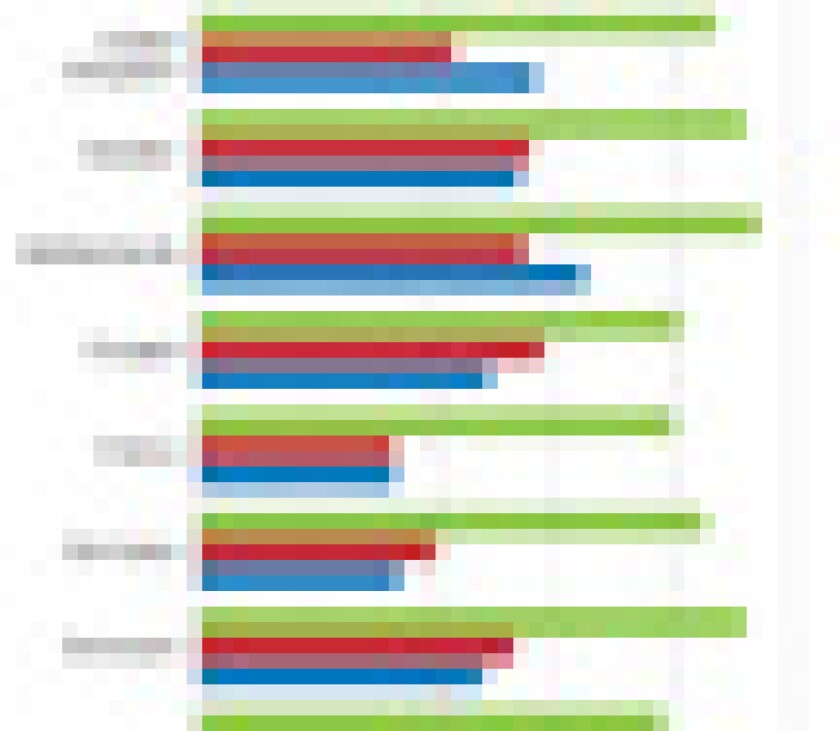
The internet has revolutionised music consumption patterns and corresponding business strategies alike. Downloading, streaming and embedding songs increasingly replace the traditional CD purchase in a shop. Particularly younger generations feel no desire to stock CDs at home and prefer to re-combine the music tracks they listen to every week. According to Eurostat 2012 the internet has (with a penetration rate of roughly 80%) conquered European households. It is estimated that across the EU about 35% of the population uses the internet to download and stream content such as music. Against this burgeoning consumption patterns, the EU's most recent adoption of a new directive on collective management of copyright and multi-territorial licensing of online music is an important step in the right direction. But is it a big enough step? The new directive fosters transparency and harmonises to a certain extent standards for multi-territorial licences from single providers and also allows artists to move their rights to another collecting society. The directive does, however, relatively little to promote a genuine licensing scheme that reflects in full the economic features of music copyright in the digital era. Rather than a genuine act of legislation born out of the internet era, it is an effort to adapt more or less successfully a range of institutions and their corresponding judicial structures to an era that has radically broken with the type of Westphalian state order prevailing at the times of the Berne Convention.


"The directive does relatively little to promote a genuine licensing scheme that reflects in full the economic features of music copyright in the digital era"


Historically, collecting societies played a crucial role in collecting royalties for musicians. Collecting societies were granted a territorially limited monopoly across Europe because it was firmly believed that transaction costs associated with royalty collection could be strongly decreased in that way. Identifying and clearing rights, so the argument went, was too complex a process to be left to the individual copyright owner. The pooling and clearing of rights under one single umbrella facilitated to a large extent the collection of licensing fees and allowed the individual artist to concentrate on her music. But to what extent do collecting societies succeeded in capturing licensing revenues for music consumed on the internet? Are these institutions fit for purpose?

Internet culture in the EU, 2012

culture.gif

Source: Eurostat 2012

a) Individual using the internet for posting messages to social media sites or instant messaging

b) Individual using the internet for playing/downloading games, images, films, music

c) Level of internet access households

To get a grasp of the situation, Oxfirst valued the digital music royalty market across the European Union and contrasted the market potential to existing revenues captured by traditional incumbents. The latest data available was sourced from Eurostat as well as the annual reports of collecting societies. In particular, we looked at the following markets: The EU 28, Austria, Belgium, the Czech Republic, Denmark, Finland, Germany, the Netherlands, Sweden and the UK. Our findings suggest that so far collecting societies have not succeeded in unleashing the digital music market. Interestingly, we found that they are quite efficient in capturing royalties for artists in offline markets. It is only when it comes to the internet that they are not up to speed. To what extent the new directive will change that remains to be seen, but what is more likely is that in addition to regulatory change, collecting societies will have to reform their business model in one way or another to succeed on the internet.

The historical value proposition

In the 19th century, when the Berne Convention was signed, it was believed that attributing to intermediaries a territorially limited legal monopoly would reduce many of the transaction costs associated with royalty capture. This belief has survived until now. Rather than have individual copyright owners chase their legitimate licensing fees themselves, it seemed that the pooling of rights into a single entity would allow the leveraging of economies of scale and scope in copyright management, which was considered to work best as a collective activity. Like any other licensing deal, the licensing of music is shackled with transaction costs and can be costly, lengthy, opaque and complex if undertaken on a bilateral basis. Markets for patent licenses, as is well known, suffer from these institutional failures. Collecting societies are a one-stop shop, which facilitate conclusions, negotiations and the management of licensing contracts. In doing so collecting societies focus primarily on business-to-business deals. End users, who would rather combine different songs on a regular basis, instead of listening to the same music repertoire over and over again, were never the primary target of collecting societies.

Royalty collection in the EU

Royalty market

Market capture

Country

E81,291,004,946

n/a

EU (28 countries)

E1,551,811,383

0.04%

Austria

E2,361,605,961

0.07%

Belgium

E463,464,461

0.07%

Czech Republic

E5,077,368,013

0.12%

Denmark

E31,411,922,733

0.07%

Germany

E2,265,886,985

0.19%

Finland

E16,716,292,109

0.12%

France

E8,164,993,171

0.05%

Netherlands

E2,248,175,903

0.25%

Sweden

E4,808,368,423

1.08%

UK

Against this background the mass licensing managed by collecting societies bears the potential to reduce information, coordination and administration costs associated with licensing deals, while at the same time promoting higher volumes of transaction. Collecting societies offered an appealing value proposition. Even though they had quite high fixed costs and an expensive administrative infrastructure, they reduced costs associated with licensing enforcement for the individual member. A single point of access minimised search and information costs. They also positively impacted bargaining costs for users and copyright owners alike. Blanket licences issued for entire music repertoires brought transaction costs down while at the same time increasing the number of songs and albums available to users. The introduction of an intermediary helped thus to bring the sell side and the buy side together.

Times change…

Since the invention of collecting societies a lot has changed. Globalisation emerged as a political and economic discourse, and many European countries unified under the umbrella of the European Union. The process of European integration steadily continues and the single market is sought to be put in place as fast as possible. In addition to political and socio-economic changes, fundamental technological changes occurred. Of these, the most important was the creation of the internet. This multitude of events changed the needs of copyright owners, impacted consumption patterns and forced a rethink of the role of collecting societies. The straightforward positive impact of collecting societies on transaction costs and the facilitation of licensing deals seemed less evident in the light of changing times. While the internet reduced some of the transaction costs associated with licensing arrangements, it opened the door to a host of other transaction costs. On the one hand registration costs and the use of copyrighted music are significantly reduced, and royalty distribution systems are simplified by introducing automated services. On the other hand many of the benefits of collecting societies hold true only in isolated national systems. Clearing multiple rights across various organisations in multiple territories with different regulations seriously undermines the established rationale for collecting societies. Multi-territorial licensing requires the cross-border administration of two services: the granting of licences to users and the distribution of royalties to copyright owners. Guibault and Gompel in their article on Collective Management and Related Rights argue that these two services currently "do not function in an optimal manner and hamper development of innovative markets for the provision of online music services".

Further reading

Plans set out for copyright levies in Europe

The first balanced approach to protecting copyright online

How should collecting societies be reformed?

The new directive allows artists for the first time to choose which collecting society should represent them. Members should in theory now be able to compare the results of different organisations. However, it remains to be seen how this works in practice given the information asymmetries that prevail. To what extent increased competition among collecting societies will help to overcome the fragmentation of musical repertoires also remains to be seen. Since collecting societies aim to reduce transaction costs, the fragmentation of repertoires on the supply side must be prevented in favor of the commercial users who generate demand. This is a difficult balance that must be achieved to render the collective rights management of digital music more efficient.

How we valued the market

Is Europe capitalising on the royalty revenue opportunities of the continuously growing market for digital music? To answer this question we valued the 2012 digital music copyright market and compared it to the online revenues collecting societies exhibit in their annual reports. To estimate the size of the market we extrapolated Eurostat data, so as to have an estimate of the number of digital music consumers. This gives us an insight in the market size in various European countries and across the EU's 28 member states. We then multiplied these figures by the fees that collecting societies charge for downloading and streaming music, as revealed on their websites or annual reports. On that basis an average estimate of a fee for the EU 28 was established by looking at the ratios of prices and disposable income of citizens. We then estimated average consumption with reference to what the Dutch collecting society BUMA/STEMRA considers to be a typical consumption pattern. This offers a baseline for valuing the potential 2012 royalty market for digital music. The valuation is limited in the sense that Eurostat does not offer very detailed statistics on European online consumption behavior. The study also does not make a statement on piracy. Very likely, piracy explains the loss in revenue to a certain extent, but it does not explain the entire story. The estimate is further limited by the incredibly complex and heterogeneous fee structures used by collecting societies across Europe, which should probably be reformed at some point.

Valuating the online copyright music market

We estimate that the royalty market for online music in the EU 28 was over €81 billion in 2012. This market would have been €31 billion in Germany, €16 billion in France, €5 billion in Denmark and €4.8 billion in the UK. The low figure in the UK. is explained by the fact that PRS for Music does not charge as high a fee as its counterparts do.

Potential versus actual revenue streams


"Like any other licensing deal, the licensing of music is shackled with transaction costs and can be costly, lengthy, opaque and complex if undertaken on a bilateral basis"


Contrasting potential royalties with de facto online revenues from collecting societies yields shocking results. The most efficient collecting society in our sample, the UK's PRS for Music, captured about 1% of the market in 2012 and this was in spite of offering the cheapest rates. The others ranged between 0.04% (Austria) and 0.2% (Sweden). The average market capture across the 10 different markets in this study was about 0.2%. This suggests either that digital music services in Europe are not generating sufficient royalties for collecting societies or that they are inefficient in capturing royalty payments from online sources. Probably it is a combination of both and digital piracy plays a certain role in it as well. However, it seems that the vast majority of the market is not being captured. As a result, artists are not receiving the royalties to which they are entitled.

Is the new directive good enough?

The new directive does not touch the national monopolies of collecting societies. It does not pave the way for new players in the market and alternative distribution mechanisms proposed will need further refinement. What would be needed is a regulatory framework that does not seek to adapt me-to-the internet institutions to the reality of the internet, but that gives space for institutions that are born out of the internet. For that to happen further reforms issued in a swift and uncomplicated manner would need to follow. Initiatives, such as Armonia, a network established by the private sector and collecting societies, could serve as helpful case studies illustrating alternative ways for overcoming existing market failures. More initiatives that follow (or, even better, improve) the business model of Armonia would need to be developed. Clearly, further institutional reform will be needed at the pan-European level to help artists make their living, while giving honest consumers the chance to pay for their digital entertainment.

ghafele.jpg

Roya Ghafele

© Roya Ghafele 2014. The author is director of consultancy Oxfirst and a fellow at Oxford University. This article draws upon her forthcoming publication: Is Europe Adequately Capturing Digital Music Markets? A Comparison of Potential and Existing Royalty Revenues Review of Economic Research on Copyright Issues, 2014

more from across site and SHARED ros bottom lb

More from across our site

Vice presidents Shinya Jitsuhiro and Hirohisa Suzuki discuss litigation trends in Japan, recruitment challenges and clients’ international expansion
IP boutique Petillion represented IKEA in the dispute, which concerned the use of the multinational’s trademarks in an immigration-focused campaign. The firm tells Managing IP how it secured the outcome
The Pizzeys-Griffith Hack integration was designed to create a stronger Australian IP platform but with several ex-Pizzeys principals now gone, the deal's success may depend on where clients place their trust
Thomas Lonsdale and Hsu Min Chung of HGF explore the practical impact of the EPO’s Enlarged Board of Appeal’s decision in G1/25 and its interplay with G1/24
The firm’s recent IP hire and launch of a new robotics industry group signal an effort to capture work emerging from AI entering the physical world
Another firm sets up shop in Dallas, bringing its patent disputes capabilities to one of the US’s busiest litigation venues
Entrepreneurial IP lawyers are still launching specialist firms, but increasingly with larger teams, broader coverage and greater infrastructure than the boutique model once implied
Jevon Louis explains how Covid led to a focus on local clients, discusses why mediation is successful in Singapore and reflects on the growing demand for AI advice
An increase in instructions from domestic companies and litigation for international clients are driving success for the Chinese IP firm, according to two lead partners
Ankur Sangal said he wants his team, nearly 30-strong already, to respond to a growing demand for specialist, commercially focused IP advice in a ‘rapidly evolving’ Indian market
Gift this article