
Before the announcement Monday evening in the US, many observers, including Managing IP, wondered if this was the IP-related enforcement action that many have been expecting. The American Chamber of Commerce (AmCham) has been particularly vocal in the call to bring legal action against India for its controversial patent invalidations and compulsory licences that AmCham argues violates TRIPS. Just prior to Froman’s announcement of the WTO enforcement action, AmCham argued that India’s compulsory licences do nothing to enhance access to medicines.
|
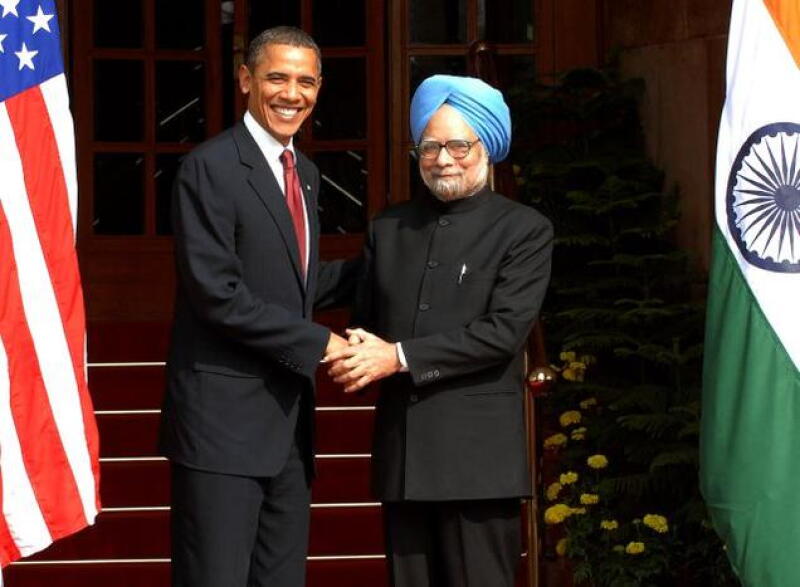
Despite US President Barack Obama and India Prime Minister Manmohan Singh’s meeting last year to discuss trade issues, tensions between their countries are still high. |
The continual lack of a WTO complaint about India’s TRIPS compliance may at first glance lend credence to the arguments of supporters of India’s patent regime. Dilip Shah of the Indian Pharmaceutical Alliance is one such defender, telling Managing IP last year that India’s drug patent policies comply with the flexibilities afforded by TRIPS. He also argued that the US government likely accepts this, albeit grudgingly.
“Novartis and other drug companies have tried to get the US government to go the WTO to file a complaint, but the government said ‘no’,” Shah said. “Do you believe that the US pharmaceutical industry with such tremendous lobbying power would hesitate to push for an official complaint against India if the TRIPS agreement is violated?”
Guidance from China?
However, the story may be more complicated. Though many practitioners point to China as a country that has made considerable improvements in IP protection and held up by rights holders as a superior IP regime to India’s, it was not too long ago that the US brought its WTO complaint against China for TRIPS violations. The US lodged its official complaint in April 2007, but only after years of Section 301 Reports admonishing China for weak protection and complaints from government officials and rights holders alike (One USTR report to Congress described China’s enforcement regime as “toothless”). In fact, AmCham was openly critical of China’s IP protection as far back as 2001, some six years before the action was initiated and even before China acceded to the WTO.
In other words, these things take time.
That is, of course, no consolation for the drug companies who argue that their investments are being unlawfully devalued by what they perceive to be an unfair patent regime. Given the sensitivities and political dance that comes with these debates, it is not surprising that even if the USTR is considering taking action, it is not moving as fast as patent holders may wish.
Furthermore, if the Chinese case is any indication, a WTO action may not necessarily be the fix that the rights holders are looking for. Despite the build-up to the complaint against China, the result was considered a disappointment from the US perspective and may have done some damage to the constructive dialogue that the two countries had built up on IP protection. Given that there is still considerable debate about the TRIPS compliance of India’s provisions on these issues, a US case, while maybe not as weak as Shah may suggest, is likely not a slam dunk either.
Join the debate
Despite the stark lines that some draw around this debate concerning India’s patent regime, the viewpoints of many Indian lawyers are quite nuanced. Last year at the India IP and Innovation Forum, the discussion among the attendees was quite lively. Interestingly, the positions taken did not necessarily correspond with everyone’s direct economic interest; some lawyers who represented innovator drug companies acknowledged that India’s public health was a unique challenge, while access to medicine advocates spoke of the need to properly incentivise research and costly innovation.
Managing IP looks to have another such discussion at this year’s event, set to take place on February 26 in New Delhi. If you are in town at that time, consider joining us and sharing your thoughts on this and other IP issues India faces today.


