

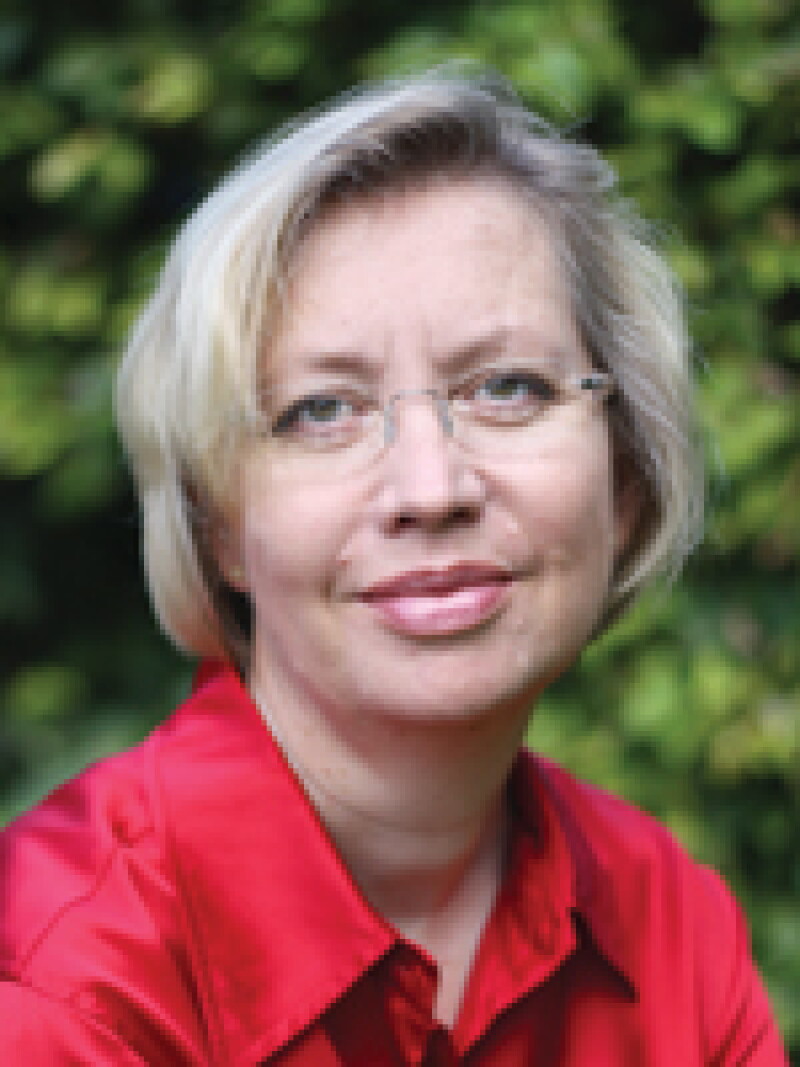
After a chance meeting at university, Tove Graulund entered the IP profession. She went on to become chair of the European trade mark association MARQUES, and last week stepped down from the Council after 22 years of service. Today, European trade mark and design attorney Graulund devotes her IP expertise to her role as a business development consultant for IP law firms. While studying English and French at university, Graulund took up a summer job as an assistant to an IP lawyer, typing up patent descriptions from a dictation machine. After her degree Graulund started working full time at the Danish IP firm.
Opportunities
“In my class, there was a girl who said her dad needed help in the summer holiday at his law firm. I was young and I felt that it was a test of my patience,” she says. “The patent descriptions were quite long, especially on a typewriter!”
During her time as an assistant, Graulund’s patience grew along with her confidence: “I was writing for the main partners on the trade mark team. I learned a lot by just listening to what he said.”
Graulund recalls a particularly important visit from a colleague: “One afternoon, one of the attorneys came into my office and closed the door. She told me that one of her clients had an opening and asked if I would be interested. I went to the interview and I got the job. This was for the dairy company which eventually became Arla Foods.”
She spent almost 20 years at the company, working as an IP counsel. At the time, Graulund found that many of her peers, fellow female professionals, exchanged their jobs for new ones after two to three years: “All my friends were taking job after job and I thought to myself: ‘Why am I not changing like everybody else?’ It was because I was enjoying my role.”
Graulund eventually became head of the IP department at Arla. During her time there, she was able to enjoy valuable time with her husband and three young children: “The company I worked for was quite good with that. In Denmark, the situation is generally very good.”
Gender equality in Denmark
Denmark is praised around the world for free education, work-life balance, social and economic progress. Earlier this year, U.S. News named Denmark the best country for women to live in. Denmark is among a majority of EU member states who have implemented the Equal Treatment Act in employment and working conditions, the Equal Pay Act and “the Gender Equality Act which applies to the promotion of gender equality and the prohibition of sex discrimination in all areas of society that are not covered by more specific legislation”.
Other provisions toward gender equality in Denmark include protection against dismissal during pregnancy and maternity leave and prohibition of harassment in employment.
Last year, the European Commission announced its strategic engagement plan for gender equality, defining five key areas of action in member states between 2016 and 2019: “equal economic independence for women and men; equal pay for work of equal value; equality in decision-making; dignity, integrity and ending gender-based violence; and promoting gender equality beyond the EU.”
Working conditions
“When I listen to women in other countries, I feel so lucky. At the Women’s Power Breakfast at INTA’s annual meeting, I remember hearing the term 'glass ceiling'. I thought: ‘What are they talking about?’ I had never heard of it.”
While working as IP counsel at Arla, Graulund took classes towards a law degree in the evening: "The boss I had at the time was a man. He told me: 'Go to work and do a course in the evening.' I had three kids running around my ankles!" In part, Graulund says that her achievements can be attributed to the boss she had at the time and the nature of her job: “I was given the opportunity to develop. I was encouraged.”
As a woman in the legal profession, Graulund says that her experience has been mostly positive and empowering. However, she has always been aware that women in similar positions were experiencing much harsher working conditions in other jurisdictions: “When I listen to women in other countries, I feel so lucky. At the Women’s Power Breakfast at INTA’s annual meeting, I remember hearing the term 'glass ceiling'. I thought: ‘What are they talking about?’ I had never heard of it.”
“I did not realise how bad it is and how angry they get. American women I meet at conferences seem so confident and liberated, so I did not imagine that they were going through such challenges. I tell my children all the time: We are really privileged and you have to remember to appreciate that.”
Progress for women in Denmark
“Law firms seem to be last when it comes to keeping up with social changes. They have old-fashioned ways of doing things.”
Graulund is a member of the INTA Trademark Administrators Committee and chaired the MARQUES EU Trademark Reform Task Force from 2010 to 2016, having previously chaired the association for several years. She says: “I was the first female chair of MARQUES - I never thought about it like that. Why should I? I would be angry if I got a job because I was a woman. I would want it to be because I was the best for the job.”
“Little by little”, Graulund says that changes towards gender equality are being implemented in Denmark: “Women have begun to work much more than they used to. Higher education enables them to have the same high paid jobs as men. The female lawyers are coming up strong.”
With regard to equality in the legal profession, Graulund believes that there is progress yet to be made saying that “law firms seem to be last when it comes to keeping up with social changes. They have old-fashioned ways of doing things.”
In 2014, a study by the CCBE (The Council of Bars and Law Societies of Europe (CCBE) reported that women accounted for 31.9% of lawyers admitted to the Bar in Denmark.
Moving on

At the end of 2006, Graulund decided to leave her role as in-house counsel and move to private practice. This coincided with her resignation as MARQUES’s Chair. She recalls: “It was like leaving home and knowing you couldn't just come back in half a year.” Initially, Graulund had been anxious about what she was going to do next. In hindsight, she says leaving her in-house position was the right decision, offering some words of advice for those considering a career change: “If you're not happy, switch. It's not as easy as it sounds. At this point in my professional life, I'm really living off my experience, knowledge and the people I know. Never burn your bridges, never carry a grudge and make friends.”
“The trade mark community is great for that.”
Once again, her networking abilities proved useful at an INTA leadership meeting in 2010. Graulund met with Robin Rolfe, long-time executive director of INTA and founder of a law practice management consultancy agency, at which point, “something clicked”. Today, Graulund and Rolfe collaborate on a number of business development assignments on behalf of IP firms all over the world.
Now six years into her career as a business development consultant, Graulund professes to love her job, describing it as fun and interesting: “I would have never guessed that I would be doing what I am doing now. It just sort of happened. If it wasn’t for the boss I had at the time and eventually friends and contacts, I would not have succeeded as a woman.”
Graulund’s career has lent her opportunities to try new things, expand her knowledge base and occupy positions of leadership. These experiences have left Graulund with a lasting lesson: “You have to stand up for yourself and take action. But, you have to be in the right place at the right time and know the right people.”


