

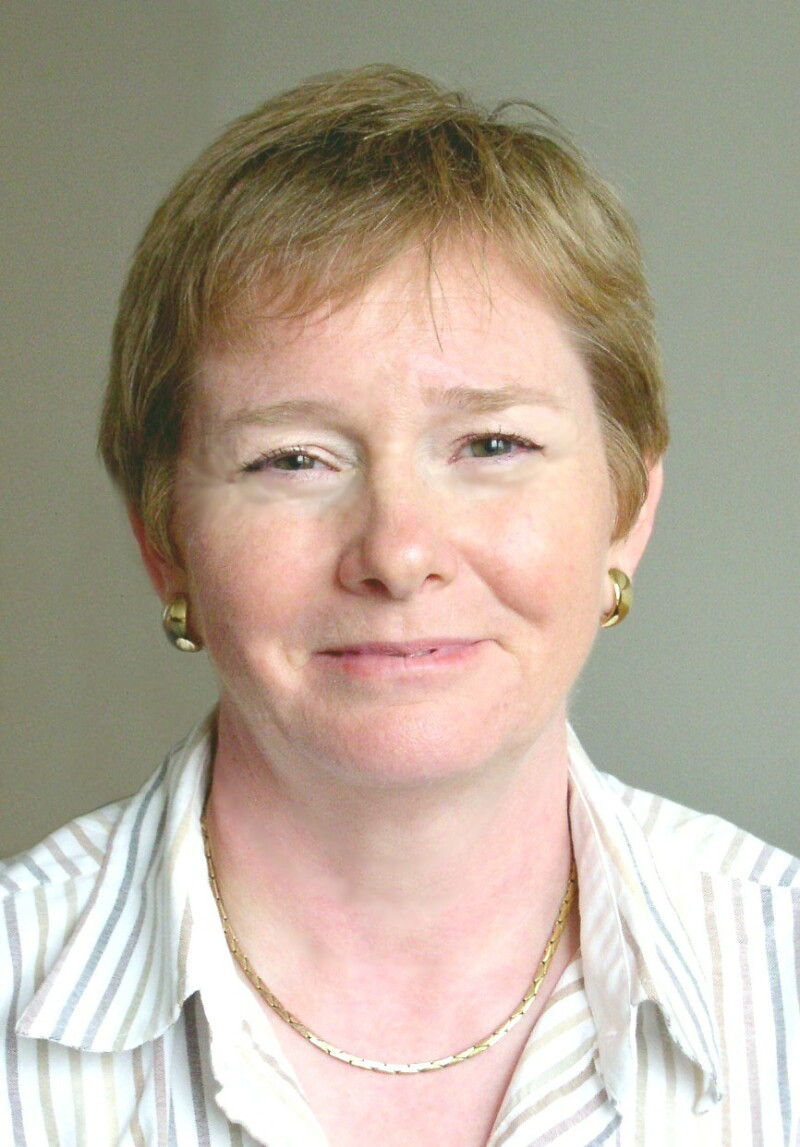
Outside her responsibilities as IP Federation President, Arnold is Associate Counsel and manager of a patent team at Shell where she has worked for almost 28 years.
After studying environmental chemical engineering at university, Arnold decided against becoming a chemical engineer. Instead, she says she was drawn to patent law for the opportunity to explore a broad spectrum of technical matters.
To date, she has handled cases relating to pharmaceuticals, agrochemical, polymer matters, refinery processes, catalysts, chemicals, oil products and much more. Arnold says: “Patents can enable you to be a jack of all trades in technical terms. I am a pure patent attorney dealing with technical subject matters and I always have been.”
IP Federation and the UPC
As Carol started her term as IP Federation president in June 2014, she is preparing to stand down from the post in early July. Looking back on her time as president she says: “Most of that time the issues that keep coming up have obviously been to do with the Unitary Patent and the Unified Patent Court, and they come up because it is a hugely significant change. In the early days, it was unclear whether it would actually happen; now it feels that all of a sudden it did and here we are.”
In July 2012, the European Council agreed a compromise that allowed the Unitary Patent and the UPC proposal to proceed. Since that time a complete secondary legal framework has been set up and the necessary structures and processes are steadily being put into place, with some of the most recent being announcements about renewal fees, court fees and the dropping of opt-out charges.
But plans for the UPC have been met with mixed feelings. As the procedure for judge selection continues, many remain optimistic about the Court, while others become increasingly fearful about the prospect of forum shopping and patent abuse.
Arnold acknowledges: “There have been a lot of people putting in a lot of hard work into trying to make the agreement and the rules and procedures be fair and understandable.” She says that ultimately it will depend on the individual court divisions to ensure that they work in a fair and harmonised manner.
One of the big concerns for many companies is the availability of injunctions in the UPC, and particularly the so-called injunction gap – the granting of a wide-ranging injunction based on a finding of infringement, before validity has been tested. If the UPC does lean towards granting injunctions, it is likely to become a more popular forum with patent owners compared to the US, where injunctions have been hard to obtain since eBay v MercExchange.
Arnold has questions of her own but remains optimistic: “I hope that we don’t get a group of litigators trying to whip up people to take ill-thought through actions. There is a general concept that bad cases make bad law – you don’t want a bad case to be the one that goes through early.”
“I was just starting in the profession when the European Patent Convention and the Patent Cooperation Treaty started. It’s an interesting evolution: to know that IP evolves as well as technology.”
Cross-practice collaboration

Amid recent reports from the USPTO and the EPO of surging patent applications, Arnold places great value in getting together with various IP representatives in industry to explore the practicalities of proposed law and practice changes and trying to do something about them if they appear unworkable or problematic, instead of waiting for an unfortunate situation to develop. “You don’t want something you could have foreseen to cause a problem, and that’s why the IP Federation have been thinking through practicalities inter alia for the UP and the UPC. We mention issues where we can, to aim for improvements; to try and get the system as best as it can be from the start.”
Drawing on contributions from a wide range of innovative companies including Dyson, Rolls Royce, GKN, IBM and Shell International, Arnold says that the IP Federation prides itself on being able to think about IP from a practical stand point.
In addition, the IP Federation is a founder member of IP Inclusive, a pan-professional diversity task force led by Andrea Brewster, president of the Chartered Institute of Patent Attorneys (CIPA).
Arnold proposes: “Inclusion is an area that is often tagged onto diversity, but inclusion is equally important.” She continues, “Diversity is often thought about just as the mix of people whether you’re thinking about race, gender and age, these days. Inclusive means to me, making it possible for people with different viewpoints or different needs, having the chance to put their voice across.”
Most recently, Arnold and her team have been looking at the EU consultation about the functioning of Directive 2004/48/EC on the enforcement of intellectual property rights online. The public consultation was published by the Commission in December 2015 and will run until April 15 2016. Arnold suggests: “The Commission have put out a consultation to seek views about online piracy and IP infringement, however the questions go further than that and they want to know experiences of other IPR enforcement.”
Tackling anti-counterfeiting

As patent attorney at Shell, anti-counterfeiting is another matter that remains high on Arnold’s agenda. “We have been for a few years moving ahead on the anti-counterfeiting front and tackling it, as best as we can.”
Arnold says that for her, anti-counterfeiting activity is as much about prioritising public health and safety. “For me, it’s more than just protecting our brand. We want to make sure that the public is not deceived into having something that is inferior to what they are paying for, or indeed dangerous.” However, she adds that maintaining realistic expectations is a key element: “When you start scratching the surface, it is horrendous how much counterfeiting exists. So, you do have to be focused on what you can tackle.”
After almost 40 years in practice, Arnold still enjoys patent law as much as the day she started. What is her secret? She responds: “You heard a speaker say today, decide what you want. I think what I have wanted is to enjoy what I have been doing, but also important to me was my children and family, to enjoy their growing up. My enjoyment comes from meeting up with people, and if something came along that seemed interesting, I would go and do it.”
On her hopes for the future of IP and speaking with respect to her patent background Arnold says: “It would be great to see the end of unnecessary formality differences between patent offices around the world … A number of them have gone, and the PCT has gone a long way in encouraging harmonisation of some of those formalities but for a business, global formality harmonisation would be of tremendous help.”
Towards retirement
Looking forward to her retirement not just from being president of the IP Federation in July but also from practising patent law at the end of September, Arnold hopes not to lose touch with the profession. “I won’t leave IP completely. I will of course aim to help the next president in their role. I hope also to participate in some of the harmonisation activities that are happening in the IP world globally, so that’s probably going to keep me out of mischief for the next couple of years.”
In her retirement, she also plans to spend time some quality time with her family and pursue her love of travelling.





