
Perplexed by pemetrexed

Who’d be a judge (1)? Mr Justice Arnold of the Patents Court in London is known for his thorough opinions. Actavis v Eli Lilly, where the former sought pan-European declarations that its generic pemetrexed product does not infringe Lilly’s European patent, was a classic exposition of the law and facts, running to 376 paragraphs (and finding in Actavis’s favour). The novel legal arguments employed by Actavis’s solicitors, Bird & Bird, helped them win the trophy for UK firm of the year at our annual awards.
Alas, the Court of Appeal (including the two IP specialists Lord Justices Floyd and Kitchin) this week overturned Arnold’s carefully considered decision. They had no problem with the pan-European jurisdiction, and agreed with his conclusion that there was no direct infringement. But they found that there would be contributory infringement as “pemetrexed dipotassium is a means relating to an essential element of the invention, notwithstanding that potassium is dissociated and sodium caused to be present in order to put the invention into effect”. The judgment also offered a strong warning against using the prosecution history in patent cases.
But of course it does not end there. Actavis has a workaround using dextrose instead of saline solution, so the case is to be remitted for a further trial on whether that would infringe Lilly’s patent.
Lilly sells pemetrexed (a chemotherapy drug) under the name Alimta and last year it was the world’s 34th biggest-selling pharmaceutical product with sales of $2.8 billion. The SPC protection expires in December this year.
When 1 = 0.5
Who’d be a judge (2)? Arnold was not the only patents judge reversed by the Court of Appeal this week. Mr Justice Birss’s decision in Smith & Nephew v ConvaTec, a patent case concerning wound dressings, was also found wanting.
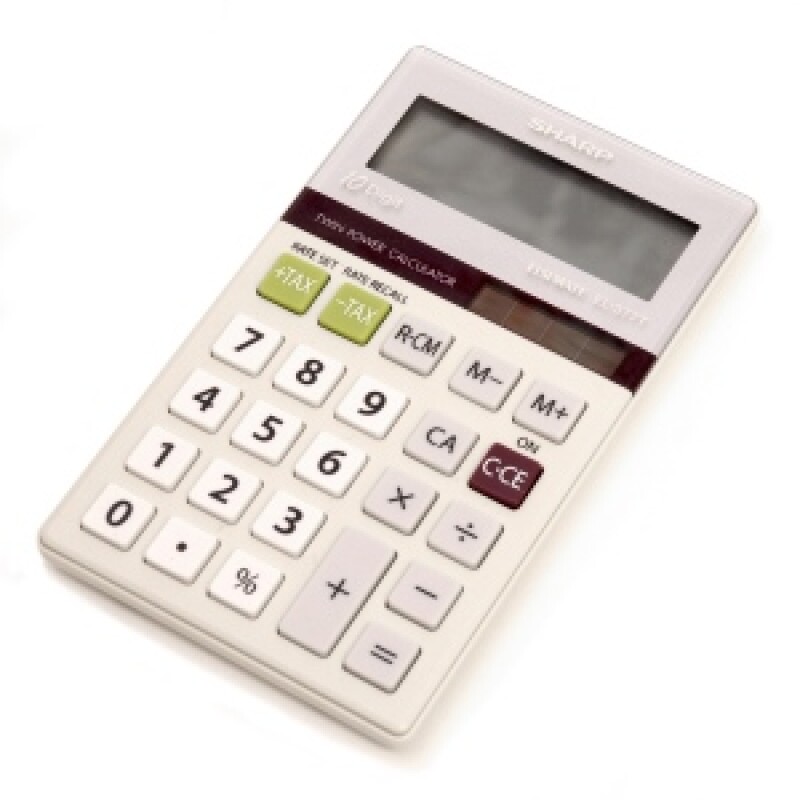
The case involved numerical values and Lord Justice Kitchin, who wrote the appeal judgment, concluded that the expression “between 1% and 25%” in the claim should be understood as “between 0.5% and 25.5%”. As Lord Justice Clarke, not an IP specialist, explained in a concurrence: “A linguist may regard the word ‘one’ as meaning ‘one’ - no more and no less. To those skilled in the art it may, however, in context, imply a range of values extending beyond the integer.”
So here’s the score this week (and you don’t need to be skilled in the art to understand it): Specialist patents judges 0, Court of Appeal 2. One can only wish the next patents judge to be appointed – widely expected to be Henry Carr QC – better luck when he puts on the wig and robes in the autumn.
English in Zurich

Meanwhile, here’s some interesting news from Switzerland’s Federal Patent Court: I hear that, three years after it was established, this week the judges heard their first case in English.
As readers may recall, the option to use English as well as French, Italian and German was inserted when the court’s rules were created, in a bid to make it more attractive to foreign litigants. This week’s case was the first where the submissions, evidence and arguments were in English and, a source tells me, the proceedings went well – even if they took slightly longer than normal.
For constitutional reasons the court’s judgment, expected later this year, will be in German. Nevertheless, I’m sure international IP owners will welcome the judges’ polyglotism, which may well provide some lessons for the future divisions of the UPC.
Decide first, explain later

We can’t complete this week’s roundup without mentioning Judge Alex Kozinski’s erudite and entertaining Sir Hugh Laddie lecture at UCL this week, which was very warmly received by the audience of lawyers, students, academics and more than a few judges – even though his message seemed to be that IP practitioners should try to stay out of court, stop being so precious about IP rights and take themselves a bit less seriously.
I’ve written a report on the lecture, and I understand you will be able to watch it online next week. During the discussion afterwards, I asked the former Chief Judge of the Ninth Circuit if he ever feels with hindsight that he got an opinion wrong. Unsurprisingly, he didn’t give a straight answer, but he did say he rarely re-reads opinions, and sometimes when they are cited back to him he doesn’t even recognise them. “One day I want to be cited by both sides [in a case],” he added.
During the lecture, he also gave an insight into the process of judging which probably makes a lot of sense to anyone who has ever been in court: “Writing judgments is much easier once you know what the decision is.”
Also on the blog this week:
What’s holding back China’s movie industry?
The way forward for India’s IP system
Should Congress amend Section 101?
How to make open innovation work
In our news and analysis this week:
Lessons in advocacy from Judge Alex Kozinski
An obscure rule gets time in spotlight
Unitary Patent renewal fees agreed
EU trade mark reform compromise criticised
Trade mark lawyer John Welch joins Wolf Greenfield
Uncertainty over PTAB remand after first Federal Circuit reversal
Supreme Court: Want post-expiration royalties? Go to Congress
Data: One year of Section 101 decisions since Alice


