
In cooperation with the EUIPO, EU law enforcement agency Europol has launched IPC3 to assist EU member states in tackling counterfeiting online and offline.
The initiative is part of Europol’s efforts to improve public safety through IP crime prevention and follows the establishment of its European Cybercrime Centre (EC3), launched in 2013 to defend the public against internet crime across Europe.
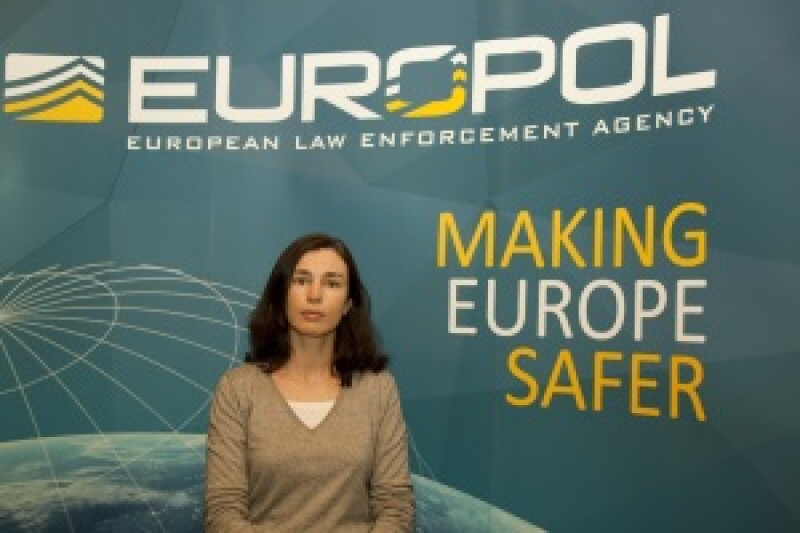
Having worked with French Customs, Dréno has helped to facilitate these efforts as part of Europol’s operational department. She says: “Europol has been working on IP infringement since 2008, where we had a small project team dedicated to this. In 2013, we also became competent to deal with safety issues because we realised that IP issues and infringement issues were often linked.”
Dréno adds: “The idea was to have a platform to interact even more with the private sector which we have already, but now we have form and structure. Our focus is the corporation between the member states in their criminal investigations.”
IPC3 priorities
In line with the EU policy framework for 2014-2017, Dréno says, one priority of the IPC3 will be to “focus on the organised criminal groups involved in the production, distribution and trafficking of counterfeit goods with an impact on health and safety”. She mentions counterfeit medicines as another area of focus.
“We will try to focus on online investigations – so, counterfeit goods sold online and any kind of IP infringements facilitated by the internet. As you can imagine, this creates a wide area of work.”
The IP crime specialist adds: “The IPC3 belongs to Europol and our main targets are the law enforcement agencies. This is what we try to make them understand: counterfeit goods are also a real threat in terms of the involvement in organised crime which it implies.”
According to Organised Crime Portfolio (OCP), a project funded by the EU Commission, the revenue from counterfeit criminal activities in the European Union per year amounts to €43 billion.
Interpol’s Operation Pangea, an international programme dedicated to preventing the illegal sale of counterfeit medicine online, is in its ninth year. In 2016, Pangea IX made 393 arrests worldwide and seized potentially dangerous medicines worth over $53 million, with support from Europol.
“It’s not just about medicine”
Dréno observes that consumers may fail to see how purchasing luxury goods could have an impact on public health and safety: “It’s not just about medicine. Counterfeit luxury goods, for instance, can be bad for your health and they also finance organised crime.”
“There is a general idea that it’s no big deal to buy a counterfeit bag, but it is. It has a lot of different impacts, especially on the economy. It’s linked to a lot of different types of crime. These aspects are not to be neglected.”
The dangers presented by counterfeit medicines have made international news following investigations into the death of the world-renowned musician, Prince. The pop legend (born Prince Rogers Nelson) passed away in April due to an accidental overdose of the opioid fentanyl, a drug used to treat “severe pain”. It has recently emerged that Prince may have been taking counterfeit medicines.
As reported by The Guardian, authorities seized “mislabelled” and “synthetic” drugs at Prince’s home, Paisley Park. An unnamed official claimed that “many pills were falsely labelled as Watson 385...used to identify pills containing a mix of acetaminophen and hydrocodone”.
Instead, these tablets contained fentanyl which is, according to pharmacologist David Kroll, “roughly 100 times more potent than hydrocodone”. In this case, Kroll said that “tell-tale” signs of drug imitation lay in the fact that “Watson 385 is no longer sold in pharmacies [and]…Watson Pharmaceuticals no longer exists. Watson changed its name to Actavis Generics in 2013”.
This is just one instance showing how the sale, importation and distribution of counterfeit products can cause grievous and even fatal harm through the misrepresentation of a trade mark.
What needs to be done?
Dréno says: “The main challenge is for us to raise the awareness of this type of crime, to underline the involvement of organised crime and the reactions that need to be taken to dismantle these organised criminal groups.”
While she says that most EU member states acknowledge that IP crime is as serious and harmful to society as any other type of crime, IPC3 will focus on improving the exchange of information between all EU member states: “There is still some work to do in this aspect.”





