Purple rage
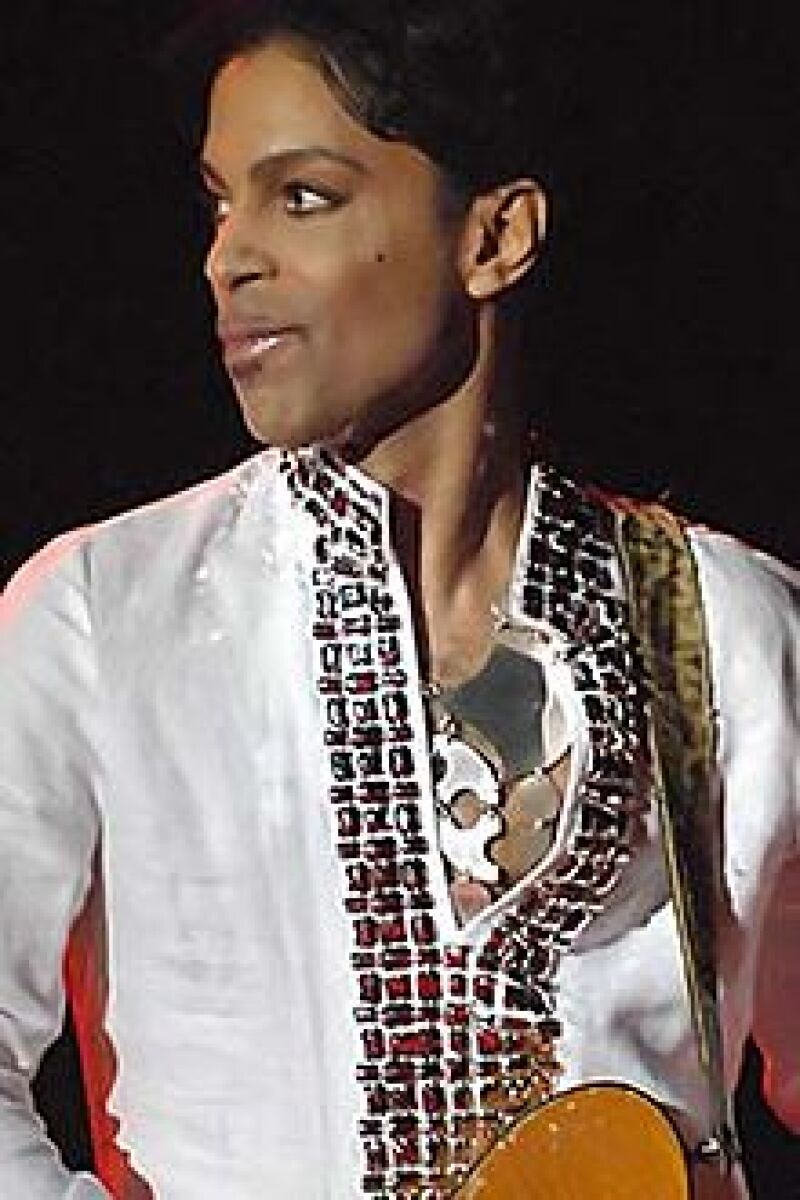
Prince had a busy week arguing over copyright. At the weekend it emerged that he had filed a lawsuit against 22 website owners, accusing them of sharing bootlegs of his concerts. The pop star was demanding $1 million each, adding up to a total of $22 million.
His lawsuit, filed in San Francisco’s US district court, alleged “massive infringement and bootlegging of Prince’s material”. The large sums demanded spurred the website owners into rapid action. It later emerged that Prince had dropped his lawsuit because the bootlegs had been taken down from the offending websites.
Google sells MM, but keeps patents
Google this week agreed to sell its Motorola Mobility unit to Lenovo for $2.91 billion in a deal that has caused some confusion over its value. Some leaped to the conclusion that Google made a big loss on the deal because the technology firm bought Motorola for $12.5 billion.
However, as the New York Times noted, this is a gross misunderstanding of the deal. The original deal included Motorola’s $3 billion in cash in hand and almost $1 billion in tax credits. Google also sold Motorola’s Arris set-top box business for $2.4bn. This leaves about a $3.2 billion difference between what Google spent or received after the sale and what Lenovo paid. But, crucially, Google will also hold onto the bulk of Motorola Mobility’s patents. Google in a regulatory filing last year said that it valued Motorola’s patents and developed technology at $5.5 billion, suggesting maybe it did not get such a bad price after all.
Victoria’s Secret gets shirty with Thomas Pink
A full-scale battle between a shirt maker and a lingerie maker over their Pink trade marks has now reached Canada. Victoria’s Secret has filed a Canadian lawsuit seeking a declaration that the trade mark for its Pink brand is not in conflict with UK-based Thomas Pink. The lingerie maker’s brand is aimed at a younger audience than its usual offerings.
The bad blood between the two started in May last year when Thomas Pink filed an action in the UK Patents County Court after Victoria’s Secret opened a flagship store on Bond Street in London. The shirt maker claimed customers were confused by the branding of Victoria’s Secret and sought an injunction in the UK and other countries.
Victoria’s Secret responded by seeking a legal declaration by the two parties of peaceful coexistence. This included in Canada, where Judge Hughes this week concluded the firm has “reasonable apprehension” its Canadian activities will be challenged by litigation. The judge allowed the case to proceed.
Flexing your muscles
Edwards Wildman hosted an unusual seminar in London this week on “Black Swans, Corporate Risk and Intellectual Property – The Truth About IP Value”. One of the speakers, Sir Richard Needham, voiced some pretty lively opinions about IP in business, complete with regional accents. He also described one famous inventor/entrepreneur as a “ruthless, determined, relentless litigant”.
Not to be outdone, Edwards Wildman partner Akash Sachdeva had his own soundbite: “IP rights are like muscles – they need to be exercised or they atrophy.” It’s a startlingly catchy statement but is it right? On twitter, @TangibleIP responded: “Bad analogy. What about effective IP that does not need to be ‘exercised’? You can’t just ‘create’ ‘exercise’.” What do readers think?

Ding, ding, seconds out!
It’s become commonplace to talk about IP disputes in martial terms (hopefully “smartphone wars” will soon be defined in legal textbooks) but the boxing dispute working its way through the England & Wales High Court needs no such embellishment. The latest round (sorry) of BBL v Sports Direct took place this week.
The case concerns the use of the trade mark Queensbury and, as Aaron Cook explains in more detail on the IPKat blog, the latest decision – by Mr Justice Birss – addressed the scope of injunctions and cross-undertakings. We don’t know yet whether this was a knockout blow, or whether there will be further punches traded in the Court of Appeal.