MIP International Patent Forum 2019: The global patentability conundrum

Managing IP is part of Legal Benchmarking Limited, 1-2 Paris Gardens, London, SE1 8ND

Copyright © Legal Benchmarking Limited and its affiliated companies 2026

Accessibility | Terms of Use | Privacy Policy | Modern Slavery Statement

Cookies Settings

MIP International Patent Forum 2019: The global patentability conundrum

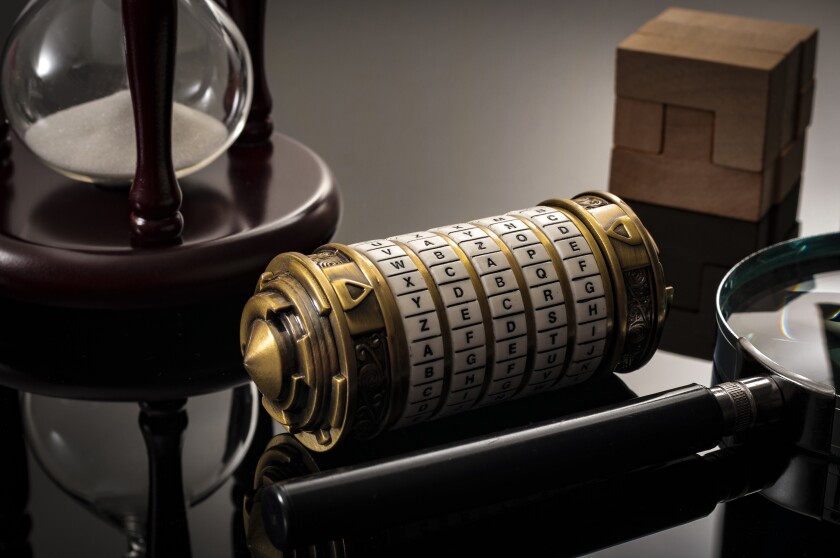
Escape the room or escape game, is a physical game where players are locked in a room and a required to examine clues and solve a puzzles. The word “Xcape” is the password for this cryptex riddle

In-house counsel at Barclays and Amadeus, plus a director at the EPO discussed the conundrum of global patent eligibility at a Managing IP conference in London

The complex nature of global patent systems was laid bare in a panel discussion at the Managing IP International Patent Forum 2019 in London on March 7.

On what was the second and final day of the conference, Calum Smyth, global head of IP at Barclays, moderated the session. He was joined by Cassandra Derham, senior IP attorney at travel technology company Amadeus, and Yannis Skulikaris, an EPO director.

Smyth began by noting that patent examiners have said they find it difficult to examine software patents, before mentioning the well-known Alice v CLS Bank decision by the US Supreme Court. The 2014 ruling has extremely restricted software patents in the US, said Smyth, who is based in the UK himself.

Offering some insight on Europe, Skulikaris was on hand to discuss “technical character,” which is just one requirement for an invention to be patentable. He gave two examples of this test being met; the first where the invention shows a technically skilled person (in contrast to a sales manager or a financial expert, for example) how to solve a technical problem, using technical means. He added that the problem solved by the invention must be technical, in contrast to one that is purely financial or mathematical.

But Skulikaris explained that when the EPO says an invention lacks technical character, it does not take a dogmatic approach. Rather, he said that the decision is open to debate and the examiner will typically ask the applicant to explain why they think that the invention is technical.

For Derham at Amadeus, some of the challenges she faces are industry-specific. She showed a slide on the International Air Transport Association (IATA), an airline trade body which helps formulate industry policy and standards. In its licensing terms for the IATA PSC Data Exchange Specification, the association says that licensees must not register any relevant IP rights for themselves and must assign to IATA any IP in breach of this obligation.

Derham argued that this situation is the opposite of that in place in the telecoms industry: “We’re stuck with not being encouraged to innovate except for our own wellbeing.”

Managing IP will provide key takeaways from the conference later this week.

more from across site and SHARED ros bottom lb

More from across our site

Six hires across the IP spectrum reflect Orrick’s efforts to better serve tech clients across the IP lifecycle
David Stone, partner at White & Case, argues that the government’s planned reforms will modernise and futureproof UK design law, but leave two of the thorniest problems unresolved
Max Scott will join the firm’s IP transactions group in California, becoming the latest Weil IP partner to secure their future
Yonatan Drori, attorney at Drori-Stav IP in Israel, explains why foreign counsel must treat Israel’s patent disclosure requirements as an ongoing obligation, rather than a one-off formality
From Japan to Southeast Asia, domestic and regional firms picked up some of the biggest prizes, while key foreign players maintained momentum
Earlier this month, Managing IP had exclusively reported that the French arm of Taylor Wessing was minded to pull out of the deal
Our latest podcast examines how Weil’s IP practice evolved, where its practitioners could (and will) go next, and which firms and markets stand to benefit from the redistribution of talent
Former Latham partner Chris Henry and transactions lawyer Liza Cotter are heading to the firm as Weil’s IP practice starts to disperse
Rival IP teams return to court for a closely watched appeal over AI and copyright, but observers hoping for answers to some of the technology’s biggest legal questions may be left disappointed
Eight years after its launch, members of the Australian patent firm’s Singapore office explain its growth strategy over the past year
Gift this article