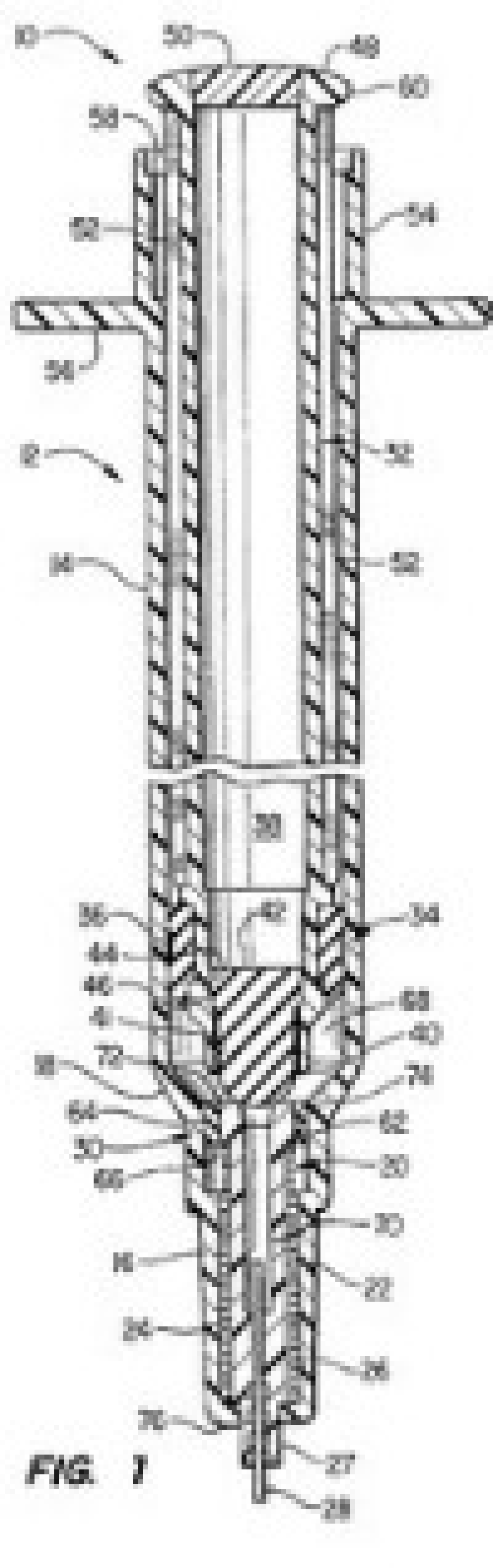
In Retractable Technologies Inc v Becton Dickinson & Company, a majority of the Federal Circuit in July this year overturned a district court’s claim construction of the term “body” with respect to retractable syringe bodies.
The Federal Circuit said that the word body should be limited to a one-piece structure in light of the patent’s specification, or the inventor’s written description of the invention. The district court said the term could be interpreted to include two-piece syringe bodies.
Retractable Technologies requested a rehearing en banc, but a majority of the Federal Circuit yesterday denied that request.
The decision came as a surprise to some, considering the Federal Circuit’s acknowledgment in recent years that viewing claim construction as a pure matter of law to be decided from scratch upon each review constitutes “absurdity”.
“Now more than ever I am convinced of the futility, indeed the absurdity, of this court’s persistence in adhering to the falsehood that claim construction is a matter of law devoid of any factual component,” wrote Judge Haldane Robert Mayer, joined by Judge Pauline Newman, in Phillips v AWH Corp.
In Phillips, a 2005 en banc Federal Circuit decision on claim construction, Mayer – who assumed senior status last year – dissented from the majority’s view that claim construction should be reviewed strictly de novo, or without deference to district courts. The court had previously ruled as much in Cyber Corp v FAS Technologies, but Mayer said that ruling had resulted in an “irrational and reckless regime”.
Mayer added: “This court was created for the purpose of bringing consistency to the patent field. Instead, we have taken this noble mandate, to reinvigorate the patent and introduce predictability to the field, and focused inappropriate power in this court. In our quest to elevate our importance, we have, however, disregarded our role as an appellate court; the resulting mayhem has seriously undermined the legitimacy of the process, if not the integrity of the institution.”
In yesterday’s denial of en banc review, Judge Kimberly Moore (joined by Chief Judge Randall Rader) and Judge Kathleen O’Malley separately echoed Mayer’s concerns. “Despite the crucial role that claim construction plays in patent litigation, our rules are still ill-defined and inconsistently applied, even by us,” wrote Moore, who would have granted en banc review.
Although O’Malley did not disagree with the majority’s analysis of the claims in the Retractable case under the present standard, she also would have granted en banc review in order to decide the issue of deference to district courts.
“It is time we stop talking about whether we should re-consider the standard of review we employ when reviewing claim construction decisions from district courts; it is time we do so,” she wrote.
Claim construction reversal rates at the Federal Circuit have been placed at around 33%. One author presented empirical evidence in 2008 that even judges in the busiest patent litigation districts do not seem to get better at claim construction over time. This has led to patent practitioners viewing claim construction as a coin flip.
“You never know which panel you’re going to get,” said Scott McBride of McAndrews Held & Malloy, who wrote an amicus brief in the Phillips case.
McBride conceded that giving deference to district courts on claim construction could result in forum shopping, but said the key problem for practitioners is consistency. “There are certainly consequences – both intended and unintended – of changing the law. I think most practitioners would say they just want [a standard] that’s easy to predict,” he added.
It is unclear why the Federal Circuit declined to take the Retractable Technologies case en banc. “This looks to be a good case because the terms at issue did not appear to be complex,” said McBride. He also said he was surprised to see that Newman did not dissent from the majority.
Still, McBride said the issue is likely to be taken up by the full court within two or three years, given the strength of yesterday’s dissenting opinions.
Bradford Lyerla of Jenner & Block said that “the court is edging closer to the nub of the problem” and “will get it right eventually”.
Lyerla looks in-depth at the way judges interpret claims and provides strategies for managing the chaos in the November issue of Managing IP magazine.