South Africa has become the first country to issue a patent designating an artificial intelligence tool – DABUS – as the inventor and the machine’s owner as the patent owner.
The patent was published in South Africa’s Patent Journal yesterday, July 28, with legal representatives Ryan Abbott and Von Seidels both confirming the news.
However, South Africa does not offer formal examination and instead requires applicants to merely complete a filing for their invention. The same patent has already been rejected in the UK, the US and at the EPO.
Related stories
DABUS applicant: ‘it would be criminal to list myself as inventor’
Thaler v Comptroller General – an AI system cannot be an inventor
‘DABUS’: the AI topic that patent lawyers should be monitoring
The invention was generated by DABUS (Device for the Autonomous Bootstrapping of Unified Sentience), which was created by Stephen Thaler, CEO of Imagination Engines. He has now been listed as the owner of the patent in South Africa.
In an interview with Managing IP, Thaler described DABUS as human-like, saying it is “sentient and develops ideas”. DABUS-created inventions include an emergency warning light and a food container that improves grip and heat transfer.
With the patent now officially granted by the Companies and Intellectual Property Commission, South Africa’s IP office, it is open to objection based on novelty and inventiveness.
Abbott – who has led a group of attorneys on behalf of DABUS and Thaler – hailed it as a crucial development in AI.
“We see this issuance as a key step towards recognition of the importance of encouraging individuals and companies to make, develop and use AI to generate socially valuable innovations.
“As AI continues to advance and to increasingly perform human sorts of activities, this will result in a host of challenges and opportunities for businesses, including with respect to disputes.”
The patent is the subject of parallel pending proceedings including in the US, UK, Germany, Australia and at the EPO.
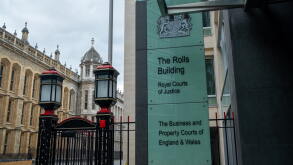
Abbott himself argued in one of the cases this week at the England and Wales Court of Appeal, which is hearing the case after the High Court upheld a UKIPO ruling that DABUS could not be deemed the inventor of the patent.