

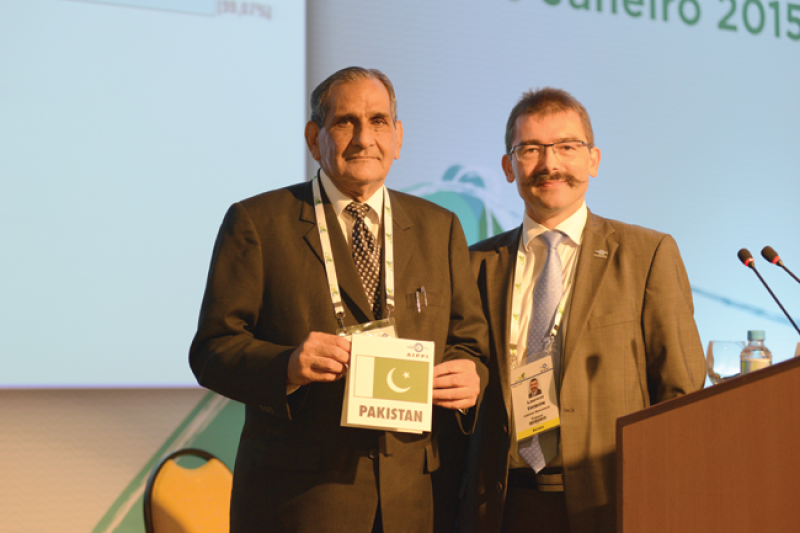
Both groups have been formed in the past year, and the ExCo confirmed them in near-unanimous votes.
The Pakistan group, which has 38 members, was presented with its flag and took up its position in the hall (between Norway and Panama) to vote on the rest of the agenda.
Vietnam’s group is not represented in person in Rio de Janeiro, but Karen Abraham from Malaysia accepted the group’s flag on its behalf. She has been active in setting up the new groups and was present at its inaugural meeting in Hanoi in August this year.
AIPPI now has 66 national groups and two regional groups (covering the Caribbean and the Middle East). Including independent members in countries where there are not yet national or regional groups, there are members in more than 100 countries.
Executive Committee roundup
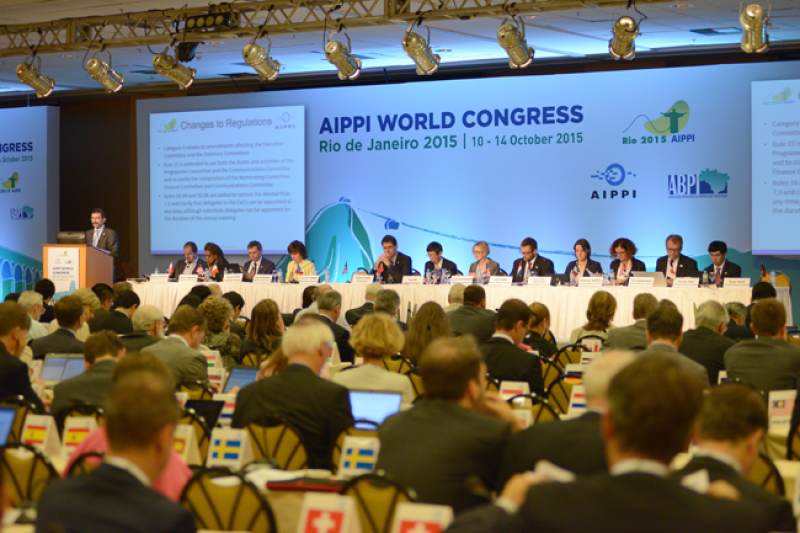
The recently agreed Trans-Pacific Partnership (TPP) was discussed during yesterday’s Executive Committee meeting. Peter Siemsen of Dannemann Siemsen, chair of AIPPI’s Standing Committee on Free-Trade Agreements, described it as “an extremely important area involving many countries”.
Though the official text has not been released yet, Siemsen said that certain facts were known, including that 12 countries are due to be members and that it is due to be implemented within three years, though some countries will have a transition period of 10 years.
One of the 23 chapters concerns IP, said Siemsen, and is understood to cover trade marks, geographical indications, industrial designs, patents, copyright and enforcement and to promote access to innovation and technology transfer. “It has been possible to include rules on traditional knowledge and genetic resources, a sensitive issue for many emerging economies,” he added. In addition, the environment chapter addresses biodiversity.

“The consequences of this agreement will affect many countries not on the rim of the Pacific,” said Siemsen, whose Committee will continue to study it. In an additional statement, Stephan Freischem of the German group noted that leaked versions of the text included mention of a grace period for patents, and said this should be “closely monitored”.
Other Committees who provided an update on their work were the newly formed Pharmaceutical Committee, which has 35 members; the Committee on Patents, which has been focusing on harmonisation issues including the Tegernsee Process, the IP5 users consultation and the work being done by the B+ group; the Geographical Indications Committee, which represented AIPPI at the recent Diplomatic Conference on the Geneva Act; and the TRIPS Committee, which held a workshop during the WTO ministerial meetings held last month.
AIPPI reforms
The ExCo was presented with a summary of the structural reforms which had been discussed at a forum in July, and circulated to all groups and independent members. A resolution agreed by the ExCo on August 15 will be put to the General Assembly on Wednesday this week (for more details on the reforms, see interview opposite). Secretary General Laurent Thibon added that these changes were part of efforts to update the association, which include the appointment of an Executive Director (see pages 4 to 5) and the refreshing of the AIPPI website, which will be live on October 25.
Reporter General Sarah Matheson added that there would also be minor changes to AIPPI’s academic work, for example working questions will be renamed study sessions and workshops will become panel sessions. Two new Standing Committees have been added in the past year: Pharmaceuticals and Commercialisation of IP. Finally, Kluwer is publishing a book on employers’ rights, which ties in with AIPPI Question 183.
The Executive Committee yesterday agreed to recognise three new members of honour: John Bochnovic, Thierry Calame and Stephan Freischem.


