FTC v Actavis ruling finds pay-to-delay may be anti-competitive

Managing IP is part of Legal Benchmarking Limited, 1-2 Paris Gardens, London, SE1 8ND

Copyright © Legal Benchmarking Limited and its affiliated companies 2026

Accessibility | Terms of Use | Privacy Policy | Modern Slavery Statement

FTC v Actavis ruling finds pay-to-delay may be anti-competitive

Pharmaceutical companies can be sued for antitrust violations when a brand name drug company pays a generic rival to keep a copycat drug off the market, the US Supreme Court ruled on Monday

In their decision, the justices overturned a previous ruling by the Court of Appeals for the Eleventh Circuit, which found that the payments are permissible provided they do not keep competitors off the market for longer than the term of the patent covering the drug.

The practice, known as a “reverse payment” or “pay-to-delay” deal, resulted from a loophole in the 1984 Hatch-Waxman Act, which encouraged generic drug companies to sue to invalidate patents held by brand name rivals in an attempt to reduce the cost of medication.
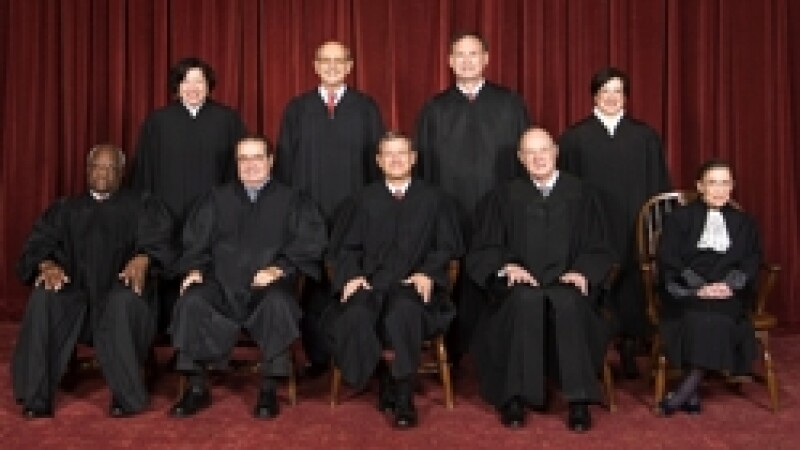
SCOTUS justices

The dispute, Federal Trade Commission v Actavis, related to a brand name drug called AndroGel (testosterone gel), made by pharmaceutical company Solvay. Actavis and Paddock filed applications for generic rivals to AndroGel. Actavis and Paddock claimed Solvay’s patent was invalid and that their drugs did not infringe it. Solvay sued Actavis and Paddock for patent infringement.

After the FDA approved the generic version of the drug made by Actavis, Actavis entered into a reverse payment deal with Solvay, agreeing not to bring its producct to market for a specified period for a fee. Paddock and Par, a third manufacturer, made similar agreements with Solvay.

The FTC sued on antitrust grounds, but a district court dismissed the case. The FTC appealed, but the Eleventh Circuit concluded that as long as the anticompetitive effects of a settlement fall within the scope of the patent covering the drug, the deal is legal.

The Supreme Court threw out the appellate court’s ruling concerning the scope of the patent, but disagreed with the FTC’s claim that pay-to-delay deals should be assumed to be illegal, concluding that each one should be decided in court on its merits.

The Court split 6-3 in the decision. A strongly worded dissent, written by Chief Justice Roberts, said the majority opinion “departs from the settled approach separating patent and antitrust law, weakens the protections afforded to innovators by patents, frustrates the public policy in favor of settling, and likely undermines the very policy it seeks to promote by forcing generics who step into the litigation ring to do so without the prospect of cash settlements”.

Roberts said the correct approach would be simply to ask whether the settlement gives Solvay monopoly power beyond what the patent already gave it.

more from across site and SHARED ros bottom lb

More from across our site

Partner Rob Jacob unveils plans to offer a beginning-to-end trademark service, how to make prosecution profitable, and why IP ‘buy-in’ from the CEO stands the firm in good stead
Sponsored by CAS
CAS provides practical pointers on how intellectual property and R&D teams can work in tandem to unlock tangible benefits and avoid wasted spend
Sponsored by CAS
CAS explores how AI is transforming intellectual property, from inventorship and copyright disputes to new demands on patent attorneys
Sponsored by That.Legal
Gillian Tan of That.Legal discusses a recent decision by the Intellectual Property Office of Singapore and what it reveals about the evidential burden in bad-faith trademark claims
Attorneys at Di Blasi, Parente & Associados share how the protection of trade secrets strengthens innovation by bringing together legal practice, regulatory developments, and established international references
Jin Ooi, who joins as a partner today, said he is excited to offer a ‘rounded’ IP service as the firm deepens its litigation expertise in the UK and Europe
As generics celebrate, practitioners believe innovator companies should brace for an ‘uphill battle’ when trying to prove induced infringement
A team from Cooley shares how they overturned a massive damages award by emphasising that the opposing company’s trade secrets claims were time-barred
Sponsored by Licks Attorneys
Eduardo Hallak, Rafaella Oliveira, and Laís Souza of Licks Attorneys explain how the provision operates in practice, highlighting evidential hurdles and best practices for patent applicants
Sponsored by Liu, Shen & Associates
Chunyu Cui and Ziqing Wu of Liu, Shen & Associates say recent trends in China’s intellectual property courts indicate alignment with international standards and send a clear signal to the global market
Gift this article