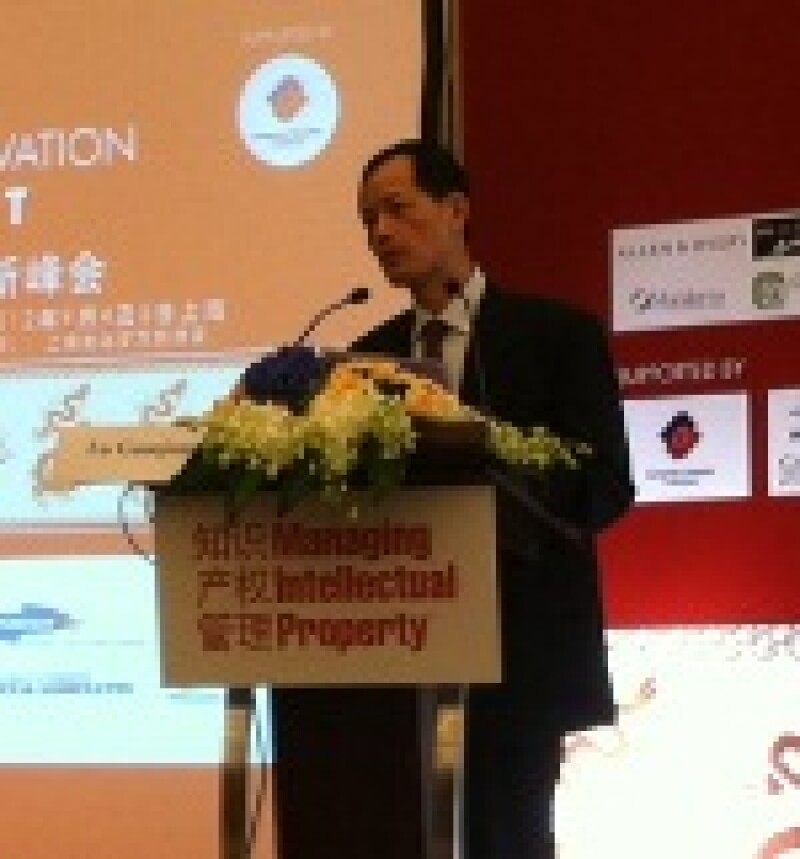
Lu Guoqiang, one of Managing IP’s 50 most influential people in IP, launched the magazine’s Global IP & Innovation Summit in Shanghai with a bold declaration for his city’s future.
“WIPO believes that the centre of innovation will shift from Europe to the Asia Pacific region, especially Asia. Shanghai should be positioning itself to be a leader in IP,” he explained in his keynote address. “The goal we set is based on current issues and the trends in IP protection and development.”
Lu said he believes Shanghai will lead in four areas: finance, trade, economic development and intellectual property. He argued that the first three goals are closely connected to IP development and that overall economic growth should be tied to IP development and protection.
Lu described the areas that the Shanghai IP Administration (SIPA) will focus on to achieve this goal. First, he stressed the need to help companies transform IP into assets. To this end, he said that the city will work closely with academic institutions to assist their research and commercialise their IP, as well as “balancing” the investment structure for IP.
Implementating this plan requires stronger ties between IP and financial services. Lu said that there are plans to facilitate investment in IP-heavy enterprises by means such as guaranteed financing, securitising IP, as well as creating an international IP trading centre.
“These initiatives will be intensely supported”, he said.
This focus on the financial side of IP and the emphasis on commercialisation may well reflect the Chinese government’s evolving attitude toward intellectual property and innovation. Just last week, the EU Chamber of Commerce released a report criticising the quality of many Chinese patents. One of the reasons it cited is the tendency for the central and local governments to set quantitative goals for patent filing, rather than using metrics such as levels of R&D funding and the number of products that make it to market.
To this end, Lu’s vision for Shanghai relies on long-term IP development to support other industries. He added that the city will also need to build the quality of services used by IP owners, such as consultants, administrators and legal professionals.
Shanghai is not the only city in the region with ambitions to an outsized influence on the IP world. Singapore has been attracting notice with its plans to be the region’s IP hub, complete with aggressive financial and tax incentives to induce companies to locate their IP and R&D in the city-state. Hong Kong has also announced its aim to be an IP trading centre for Asia.
The Global IP & Innovation Summit takes place on September 4 and 5.